March 21 marked the first-ever World Day for Glaciers, a global initiative to spotlight the rapid disappearance of the planet’s ice reserves. But beyond the symbolism, a silent catastrophe is unfolding. What’s melting isn’t just ice — it’s the foundation of entire regions, economies, and communities.
Backed by the United Nations, this observance sets the stage for the upcoming International Year of Glaciers’ Preservation in 2025. Nearly 2 billion people depend on glaciers for freshwater, yet their future is becoming increasingly uncertain.

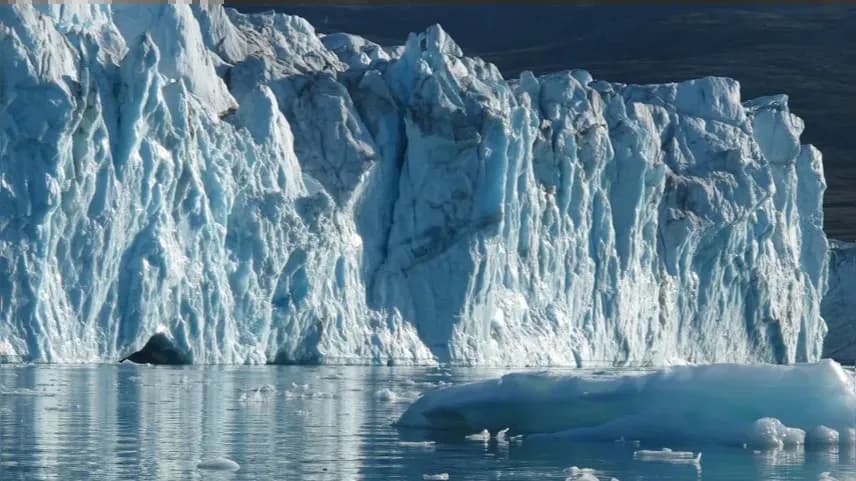
Across the world’s mountain ranges — from the Himalayas to the Andes, from Greenland to Alaska — glaciers are retreating at unprecedented rates. As global temperatures rise, ancient ice masses are giving way to volatile glacial lakes — bodies of water precariously held back by unstable ice and rock.
A surge in deadly floods
These lakes are fueling a surge in glacial lake outburst floods (GLOFs), a deadly and growing threat. In October 2023, one such flood in the Indian Himalayas destroyed a hydropower plant, wiped out more than 30 bridges, and claimed over 50 lives. In Alaska, the Mendenhall Glacier has triggered repeated flash floods as ice dams give way.
In Peru, a glacial lake above the city of Huaraz has expanded dramatically since a catastrophic flood in 1941, now threatening over 35,000 people. While these lakes provide crucial meltwater, they also pose an ever-growing risk — if their natural dams break, they unleash destruction with little warning.
Mountains crumbling
The crisis extends beyond flooding. As permafrost—frozen soil that stabilizes mountains—thaws, landslides and rockfalls are becoming more frequent. In 2017, a massive chunk of Nepal’s Saldim Peak collapsed into a glacial lake, triggering another devastating flood. Hidden threats, such as englacial floods, are also emerging, as meltwater builds up inside glaciers before bursting out in sudden, catastrophic events.
The price of a melting world
The toll of glacier-related disasters isn’t just measured in lives lost. The destruction of hydropower plants, roads, and communities carries a multi-billion-dollar price tag. A 2024 study identified over 110,000 glacial lakes worldwide, placing 10 million people at immediate risk—and scientists warn the crisis is accelerating.
A global response to a cryospheric crisis
Governments and scientific communities are racing to mitigate the risks. Early warning systems, controlled lake drainage, and stricter zoning laws are being implemented in vulnerable regions. The United Nations has designated 2025 to 2034 as the “Decade of Action in Cryospheric Sciences,” an effort to enhance global research and response strategies.
Scientists are mapping unstable zones, refining flood models, and analyzing the effects of permafrost thaw on mountain stability.
This first World Day for Glaciers serves as a stark reminder: the cryosphere is changing, and the consequences are not decades away — they are here now. The time to act is slipping away as fast as the glaciers themselves.




.webp&w=256&q=75)