The National Council of Educational Research and Training (NCERT) has defended the naming and content of its Grade 6 Kannada R3 textbook following concerns raised in sections of the media, stating that the book neither promotes vegetarianism nor discourages non-vegetarian food.
In a clarification, NCERT said the textbook's title, "Krishna," was chosen in line with its practice of naming language textbooks after major rivers across India. The council noted that the name refers to the Krishna River, which is closely associated with Karnataka.

"It is to be noted that the Hindi textbook has been named as 'Ganga', the English textbook has been named as 'Kaveri', and the Urdu textbook has been named as 'Jamuna' (Yamuna). Similarly, the Kannada textbook has been named as 'Krishna'," NCERT said.
According to the council, the naming convention reflects local cultural contexts and aligns with the objectives outlined in the National Education Policy (NEP) 2020 and the National Curriculum Framework for School Education (NCF-SE) 2023.
"This approach is appropriate from a localised and cultural perspective, particularly in view of the emphasis laid in NEP 2020 and NCF-SE 2023 on rootedness, cultural connect, and meaningful contexts for learners," it said.
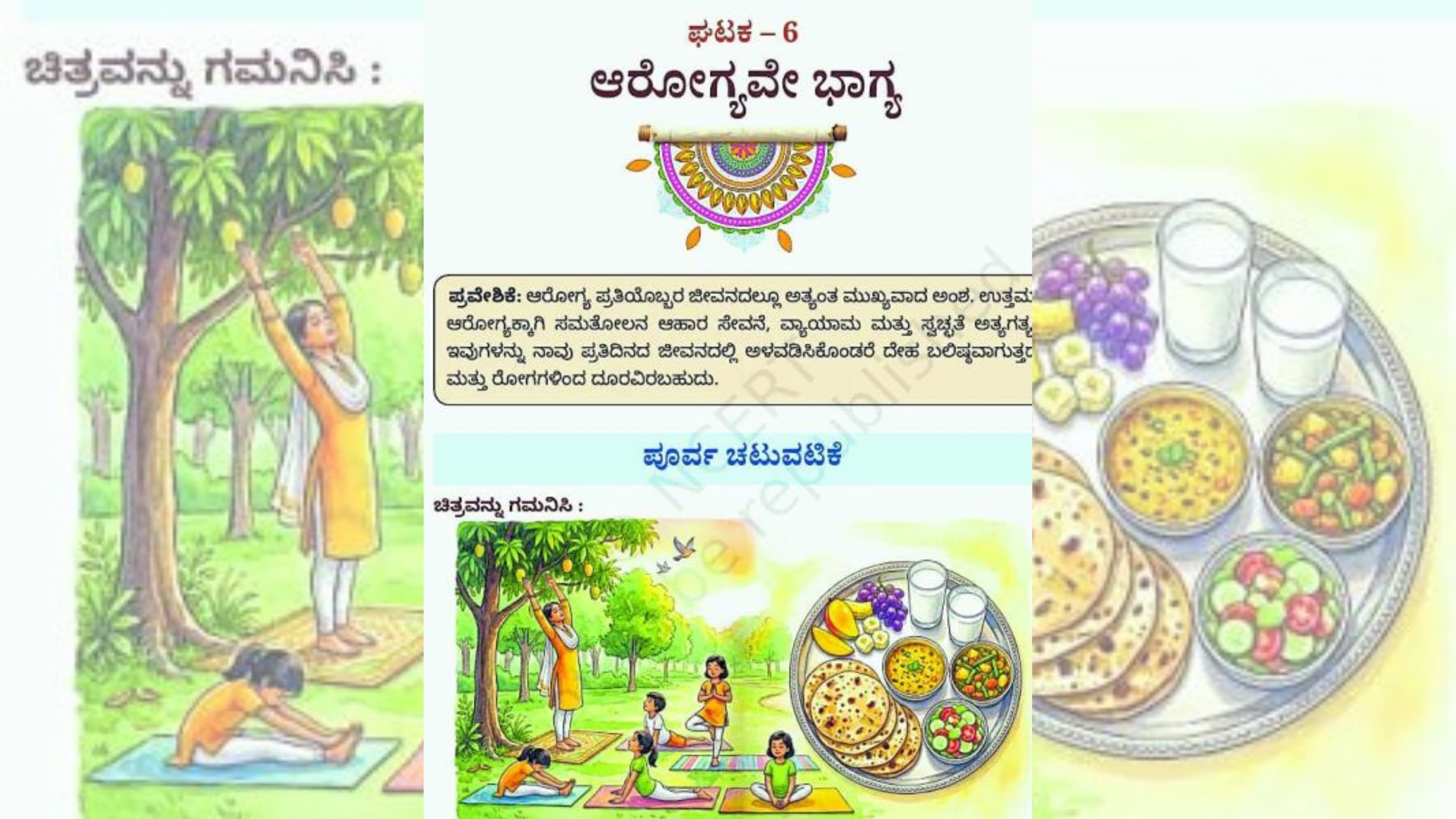
Responding to concerns about references to food habits in the textbook, NCERT said the subject is addressed in Chapter 6, titled "Health is Wealth," which focuses on the importance of balanced nutrition and healthy living.
"As far as the issue raised about the diet, it is stated that a balanced diet has been covered in Chapter 6 of this textbook. It is clearly mentioned in the introductory note of the chapter 'Health is Wealth' that for good health, a balanced diet, exercise and cleanliness are essential," the release said.
The council explained that the chapter discusses a range of food groups required for a healthy diet, including milk, fruits, vegetables, green leafy vegetables, and other food items. It also pointed out that an illustration in the chapter includes both vegetarian and non-vegetarian foods.
"The chapter also includes examples of healthy traditional foods from different states, thereby connecting balanced/healthy food with India's food diversity," it said.
NCERT dismissed allegations that the textbook advocates vegetarianism.
"Nowhere in the textbook is vegetarianism explained or justified, nor is non-vegetarian food opposed. The purpose of the chapter is to create awareness about healthy food items," the council said.
It added that the concept of balanced nutrition is reinforced through classroom activities and questions included in the chapter, such as "What is a balanced diet?"
Reaffirming its commitment to educational quality, NCERT said it remains open to feedback and suggestions from educators, parents, and other stakeholders.
"It is reiterated that NCERT is committed to providing students with high-quality teaching-learning material, including textbooks, and welcomes any suggestions and constructive criticism from all stakeholders to further improve its textbooks in line with the vision of NEP 2020 and NCF-SE 2023," the council said.



_1600x900.jpg&w=256&q=75)
.jpg&w=256&q=75)
.jpg&w=256&q=75)
