NTA looks beyond India as DG Singh highlights BRICS cooperation and China’s Gaokao
The agency is strengthening examination security, question-paper checks, artificial intelligence tools and computer-based testing while preparing for longer-term international collaboration after recent NEET-UG controversies.
Pragya Kumari14 September 2026 15:24
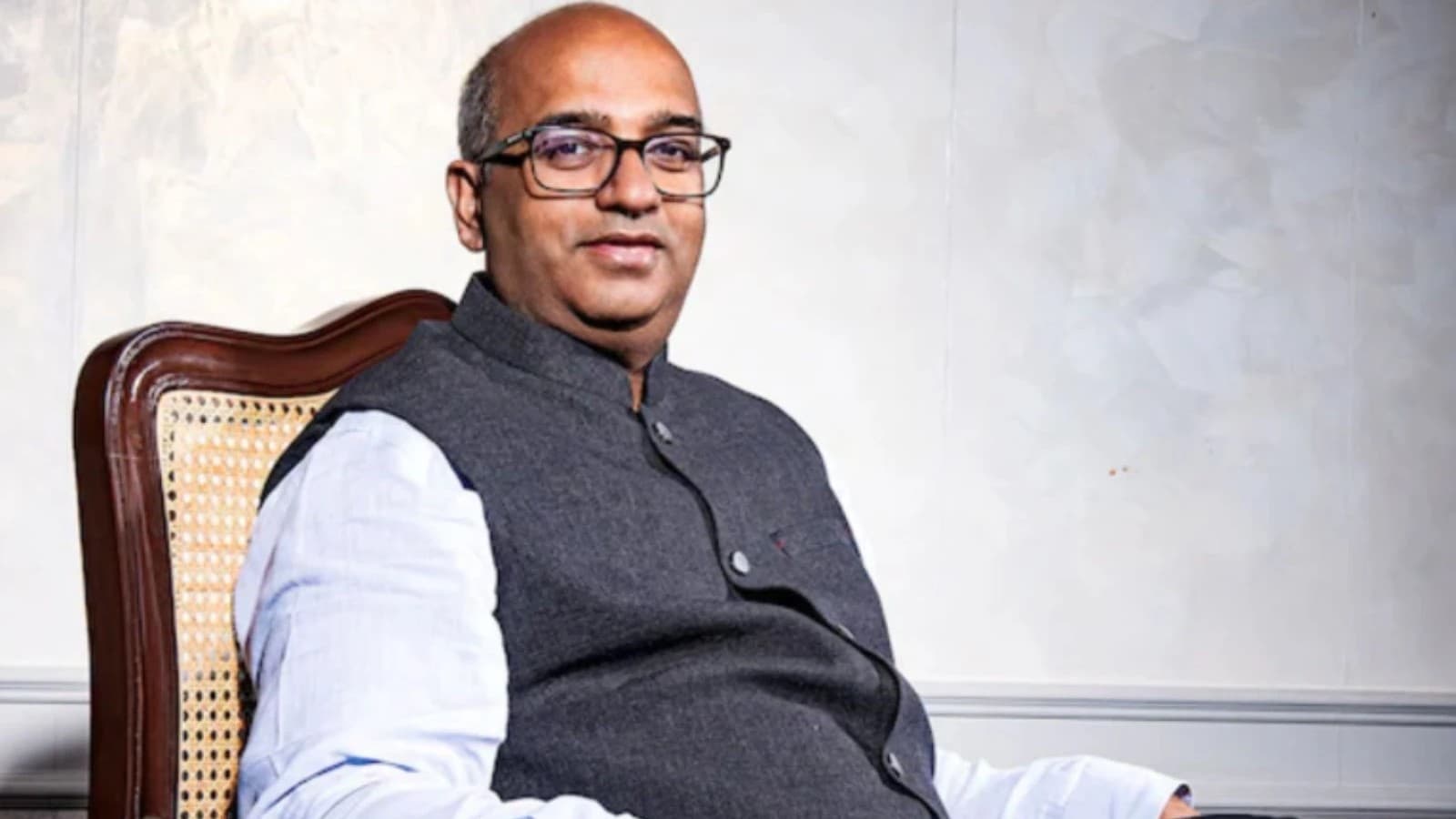
National Testing Agency (NTA) Director General Abhishek Singh has said the agency is looking beyond India's examination ecosystem, with plans to eventually work with other countries and exchange expertise with BRICS nations after strengthening its own testing framework.
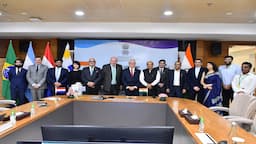
“Right now we are trying to consolidate our own testing framework. So first is to improve the systems and strengthen the processes within India so that we are able to conduct examinations without any error in a completely fair manner,” Singh said on the sidelines of the 2026 BRICS Summit in New Delhi on Sept 12 and 13.
Singh said the NTA's immediate priority is to make its domestic examinations more secure, transparent and reliable before taking up cross-border testing. “Cross-border examinations are the next step,” he said, indicating that the agency could eventually develop systems that other countries, including BRICS members, could adopt.
The discussions could cover examination security, question-paper generation, technology and large-scale test management. Singh pointed to China's Gaokao as one examination system from which India could learn, particularly given the scale at which it is conducted and the extensive security and logistical arrangements surrounding it.
“Every examination will require generation of question papers. So there are areas in which we can discuss with each other, collaborate and share knowledge,” Singh said.
The NTA's international ambitions come at a time when the agency itself is undergoing one of its most extensive overhauls since its establishment in 2017. The changes have followed controversies surrounding the conduct and security of major examinations, particularly NEET-UG, and growing demands for stronger institutional safeguards.
The agency is now restructuring its workforce, strengthening question-paper verification, improving physical and digital security and expanding computer-based testing infrastructure. It is also looking at artificial intelligence to detect irregularities and prevent examination fraud.
NTA overhaul follows examination controversies
The National Testing Agency was established in November 2017 as an autonomous organization under the Ministry of Education to conduct major national-level entrance and eligibility examinations using standardized, technology-driven systems.
Before the NTA was established, large national examinations were conducted by different bodies, including the Central Board of Secondary Education and other institutions. The agency was created to bring greater standardization, efficiency and transparency to examinations conducted across the country.
It now conducts some of India's largest examinations, including the Joint Entrance Examination (JEE) Main, National Eligibility cum Entrance Test Undergraduate (NEET-UG), University Grants Commission National Eligibility Test (UGC-NET) and Common University Entrance Test (CUET), among others.
However, a series of controversies have raised questions about examination security, question-paper preparation, administrative controls and the agency's ability to prevent malpractice.
The scrutiny intensified after allegations of a paper leak surrounding NEET-UG 2026. The medical entrance examination was held on May 3 for more than 22 lakh candidates seeking admission to undergraduate medical and allied health programs.
Soon after the examination, Rajasthan-based tutor Shashikant Suthar alleged that several questions in the NEET-UG paper matched material contained in a PDF that had allegedly circulated before the test. He said the similarities were particularly noticeable in the Chemistry section and that he reported the matter to the NTA, Ministry of Education and other authorities.
The NTA conducted an internal verification before the matter was transferred to the Central Bureau of Investigation for further investigation.
The controversy eventually led to cancellation of the examination and a nationwide re-test involving nearly 22.79 lakh candidates. It was the first nationwide cancellation of NEET since the NTA began conducting the medical entrance examination in 2019.
The re-examination was held on June 21, with the NTA saying almost all affected candidates appeared. The episode nevertheless triggered a wider debate over whether a re-test alone could address concerns about the examination system.
The controversy also revived memories of the NEET-UG 2024 episode, when allegations of paper leaks and other irregularities had led to widespread protests and a CBI investigation.
Student protests turn into wider examination reform campaign
The NEET-UG controversy soon grew into a broader student movement demanding accountability and reforms in India's competitive examination system. An online campaign that emerged after remarks during a May 16 Supreme Court hearing evolved into the satirical "Cockroach Janta Party" (CJP), which called for stronger safeguards against paper leaks, greater transparency in NTA's functioning and the resignation of then Education Minister Dharmendra Pradhan.
Protests spread to Jantar Mantar and several states through June and July, drawing students preparing for other competitive exams. Education reform advocate Sonam Wangchuk joined the agitation on June 28, while a "Chalo Sansad" march on July 20 ended after police stopped protesters.
The Centre later announced measures including fast-track courts, tougher penalties for examination fraud and wider testing reforms, including plans to shift NEET-UG from pen-and-paper to computer-based testing from 2027.
Pradhan resigns, Joshi takes charge of Education Ministry
The NEET-UG controversy led to a change in the Education Ministry, with Dharmendra Pradhan resigning after weeks of protests and scrutiny. Defending the government's response, he said, "The Government of India immediately took cognisance of the matter, handed over the investigation to the CBI, cancelled the examination and announced a fresh date for the re-examination."
Pradhan said, "From the very first day, I took responsibility and never turned away from this situation," and later explained, "This is not a matter of personal prestige for me."
President Droupadi Murmu accepted his resignation and assigned the Education Ministry to Pralhad Joshi in addition to his existing portfolios. Joshi said he would continue ongoing education reforms.
The Cockroach Janta Party subsequently ended its 37-day protest after meeting Union Ministers J P Nadda and Jitendra Singh and receiving assurances on its remaining demands.
NTA begins sweeping structural and personnel reforms
The NTA has begun a major restructuring of its examination operations following the NEET-UG controversy, removing personnel and experts while bringing in new professionals in key technical and security roles.
The agency plans to appoint specialists in technology, finance, information security, test security, research and psychometrics, including professionals from the private sector. More than 50 staff members and around 600 experts have been removed at different stages, with additional officials expected to join.
The government has also ordered a comprehensive overhaul of the NTA's Confidential Operations (CONOPS) system, covering secure rooms, air-gapped systems and device-deposit protocols, along with a detailed audit of examination processes.
Four-tier question-paper checks introduced
The NTA is strengthening its question-paper review process by introducing a four-tier scrutiny system aimed at preventing factual, typographical, translation and language-related errors.
The move follows complaints about UGC-NET papers in English, Commerce and Sociology. An NTA committee found issues including misspelled scholars' names, garbled book titles, flawed wording, grammatical and punctuation errors, non-standard terminology and repeated questions from previous exams.
It recommended re-conducting the affected papers. The English and Commerce exams were scheduled for Sept 9 and Sociology for Sept 10, with no additional examination fee for candidates.
NTA strengthens physical security and brings in new officials
The NTA is also strengthening its physical infrastructure and administrative structure as part of the broader overhaul of its examination system.
The agency is relocating offices on priority and upgrading security arrangements, including the deployment of Central Industrial Security Force personnel.
IAS officer Prasanna Venkatesh V and IPS officer Ravi Kumar Singh have joined as NTA directors. Venkatesh, a 2012-batch IAS officer, has been assigned to the agency under the Central Staffing Scheme for five years, while Singh, a 2012-batch Andhra Pradesh-cadre IPS officer, previously served with the Delhi Police Economic Offences Wing.
IRS officer Amit Samdariya, a 2016-batch officer, has also been appointed joint director at the deputy secretary level for four years.
The Supreme Court on Aug 19 directed the Centre and NTA to institutionalize NEET reforms and strengthen examination security. A bench of Justices PS Narasimha and Alok Aradhe sought details on implementing recommendations of the Radhakrishnan and Nandan Nilekani committees.
"The Radhakrishnan Committee has correctly said it is a systemic problem which needs institutionalisation, which is the most important part of it. This process on paper everything is good. But then one exam happens and by the time the second exam happens it is a new picture all together," the bench said.
The court stressed permanent safeguards instead of temporary responses to examination failures. The Centre said question-paper security had been strengthened from printing to delivery, with GPS-equipped vehicles tracking their movement.
Nilekani panel examines wider reforms
A Nandan Nilekani-led task force is examining long-term reforms covering examination security, assessment, governance, malpractice prevention, secure CBT, infrastructure and candidate access. Its members include former ISRO Chairman S Somnath, former IB Director Tapan Deka and IIT Chennai Director V Kamakoti.
NTA explores AI for exam security
NTA DG Abhishek Singh said the agency is studying AI for testing and fraud prevention by analyzing logs, data and patterns.
“Not with the BRICS partners, but we are currently looking at use of AI for conducting not only testing but also fraud prevention, trying to look at logs, trying to look at data, trying to look at analytics in order to ensure that the examinations are conducted without any error or without any problems,” he said.
NEET-UG to shift to CBT
NEET-UG is also being prepared for a shift from pen-and-paper to computer-based testing, with the Nilekani panel examining the transition.
“All our examinations are CBT except the NEET examination. On NEET also, we will be moving to CBT very soon,” Singh said.
NTA has asked AICTE to identify government institutions with computers, internet, networking, power backup, CCTV and suitable space that could serve as testing centers. Institutions were asked to submit details by Sept 15.
What NTA can learn from China's Gaokao
The NTA's interest in international cooperation comes against the backdrop of the scale and complexity of examinations such as China's Gaokao.
The Gaokao is China's nationally coordinated annual college entrance examination and plays a central role in determining undergraduate university admissions. Millions of students appear for the examination each year after extensive preparation during high school.
The examination generally includes Chinese language and literature, mathematics and a foreign language, commonly English, with additional subjects determined by the examination structure followed in different regions.
Unlike a single standardized system operating identically across the country, the Gaokao has regional variations in its structure and scoring. The maximum score is commonly 750 points in many regions, although systems in places such as Shanghai and Hainan differ.
The scale of the examination has resulted in extensive arrangements around test days. Authorities in Chinese cities have implemented measures such as traffic management, restrictions on construction activity near examination centers and other steps intended to create secure and quiet testing environments.
The examination is also known for the intense preparation undertaken by students and the enormous importance attached to performance in university admissions. The pressure associated with the test has prompted extensive discussion around student well-being and the high-stakes nature of a single examination.
For India, the relevance of the Gaokao extends beyond the number of candidates. Its large-scale coordination, security protocols, logistics and examination-day management offer areas that could be studied as the NTA considers how to strengthen its own national testing architecture.
NTA's international ambitions tied to domestic reforms
NTA's BRICS discussions point to international examination cooperation as a longer-term goal. Singh has said the agency first wants to strengthen India's testing systems before exploring cross-border examinations and sharing examination technology.
The immediate focus remains domestic: improving security, question-paper checks, CBT infrastructure, cybersecurity, AI-based monitoring and administrative systems.








.webp&w=256&q=75)
