


The proposal includes high-rise residential buildings, reconstruction of Jubilee Hall and the PG Men’s Hostel, and new facilities at Dhaka, Najafgarh, Surajmal Vihar and Dwarka campuses.
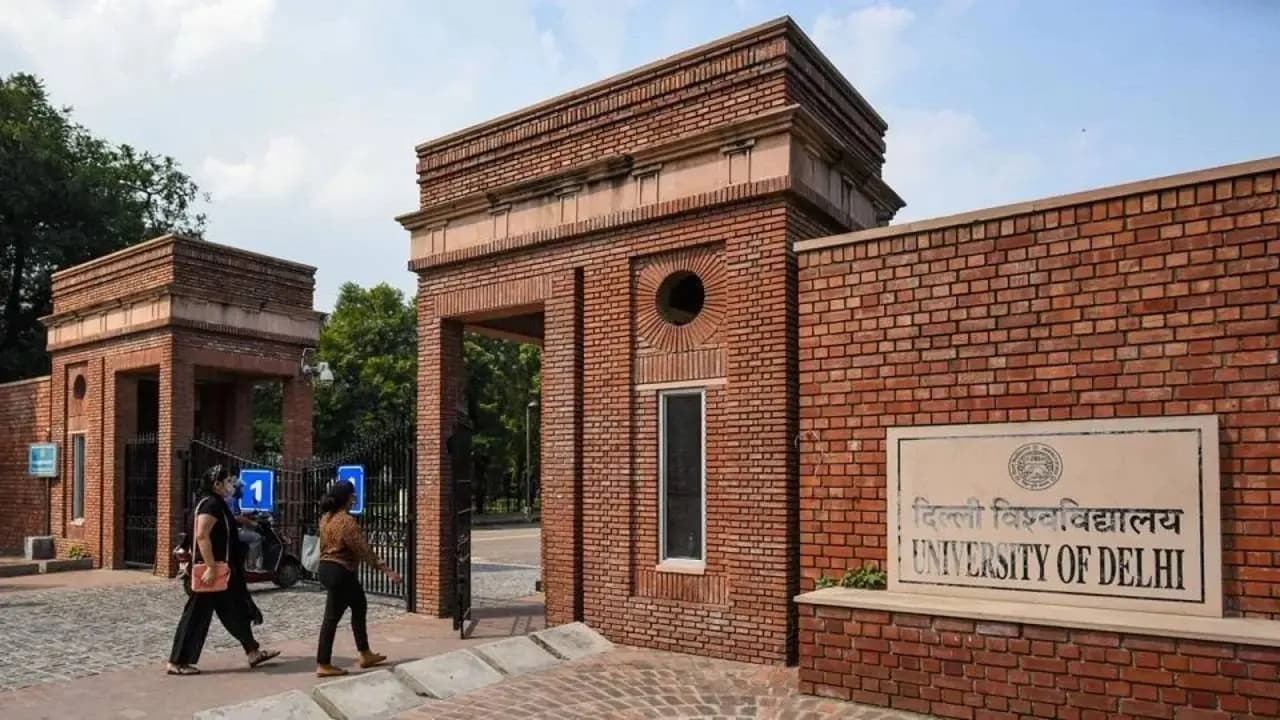
Delhi University has approved a ₹5,889-crore plan to expand student accommodation, with new hostel buildings and the reconstruction of two existing facilities expected to provide a total of 21,895 additional or rebuilt hostel places for students.
The proposal was cleared at the university’s Executive Council meeting on Tuesday, the first such meeting since Vice-Chancellor Yogesh Singh began his second term on Oct 8.

Of the total proposed expenditure, ₹4,027 crore has been set aside for new hostels that will accommodate 15,758 students. Another ₹1,862 crore has been allocated to reconstruct two existing hostels, which are expected to provide accommodation for 6,137 students, according to the university’s statement.
The plan includes the construction of additional multistory hostel buildings at the university’s Dhaka complex, Surajmal Vihar campus and Najafgarh campus.
The Executive Council has also approved the reconstruction of Jubilee Hall and the PG Men’s Hostel. Singh has clarified that the existing hostels will retain their names after the reconstruction work is completed.
The university is considering high-rise residential facilities to make better use of the limited land available across its campuses. An Executive Council member said the meeting discussed plans to construct vertical hostels of up to 32 floors wherever space permits.
“The discussion at the EC meeting included building vertical hostels of up to 32 floors wherever space is available for students across DU. Funds for the projects would be sought from the Ministry of Education as grant-in-aid,” an Executive Council member said.
According to Singh, the proposed buildings are being designed to meet contemporary requirements and account for the university’s long-term accommodation needs.
“The designs for these buildings have been prepared keeping the requirements of the 21st century in mind,” Singh has said, according to the university’s statement.
He has noted that the circumstances under which the university’s earlier hostels were built differed from those expected in the future, and that planning is being done with the next 100 years in view.
Given the shortage of vacant land available for construction within the university, the hostel blocks will be planned to use the maximum permissible Floor Area Ratio (FAR) for their respective campuses.
The facilities are expected to include dining halls, shops, common rooms, reading rooms and residences for wardens, university officials said.
New hostels planned across DU campuses
The proposed expansion will cover several locations across Delhi University’s campus network. In addition to the Dhaka complex, the university plans to build separate hostels for male and female students at Veer Savarkar College in Roshanpura, Najafgarh.
Hostel facilities for both men and women are also planned at DU’s West Campus in Dwarka and East Campus in Surajmal Vihar, Karkardooma. The university’s statement said that additional multistory buildings would be developed at the Dhaka complex, Surajmal Vihar and Najafgarh as part of the wider accommodation plan.
Executive Council members have also encouraged colleges affiliated with the university to develop proposals for hostel construction on their own premises. Officials said colleges have been urged to prepare the necessary plans and submit them to the relevant funding agency.
The approval comes as the university faces renewed scrutiny over its limited hostel capacity and the delays affecting previously announced construction projects. In September, The Indian Express reported that several hostel projects announced during Singh’s first term had either been delayed or remained at the planning stage. Some were awaiting the release of funds or statutory clearances.
Delays in previously announced hostel projects
The Dhaka complex has been among the locations where construction has progressed more slowly than originally scheduled. Work on a 1,456-seat hostel-cum-residential block began in April 2026, even though the project had been awarded in September 2023 and was initially scheduled for completion by March 2025.
The project, estimated to cost ₹318 crore, had reached the basement stage, with officials indicating that it was unlikely to be completed before 2028. The delay highlights the gap between the announcement of accommodation projects and their actual delivery.
Two other proposed facilities at the Dhaka complex have also faced delays linked to funding. These include a 1,050-seat girls’ hostel and studio apartment complex, as well as the Nirbhaya Residential Accommodation project, which is intended to provide housing for 1,000 women students.
University officials said discussions on these projects remained at an early stage and that the process was likely to take time. No construction or completion timelines had been established for either project.
The latest approval follows questions over the implementation of hostel plans announced during Singh’s first tenure. Although several projects had been proposed, progress on some remained limited because of funding constraints, pending approvals or delays in starting construction.
Hostel shortage raises student safety concerns
The university’s accommodation shortage has also drawn attention following the September 6 building collapse in Satya Niketan, which killed seven people, including five Delhi University students.
A day after the incident, on Sep 7, the Delhi High Court highlighted what it described as the “absolutely inadequate number of hostels” at DU. The court observed that the lack of sufficient university accommodation was forcing students to seek housing in paying guest facilities that could be unsafe, putting their lives and security at risk.
The incident brought renewed focus to the housing conditions faced by students who cannot secure hostel places and must find accommodation outside the university.
The newly approved plan is intended to increase residential capacity, although the timeline for implementing the various projects remains an important consideration.
DU’s hostel capacity and enrollment gap
Delhi University has more than 2.6 lakh enrolled students, but its hostel capacity has not expanded at the same pace as enrollment. Official figures show that the university has 3,422 postgraduate hostel seats at the university level, with another 3,788 seats available across its colleges.
Last month, DU proposed adding 1,622 hostel seats at the university level and a further 3,922 seats across its colleges. These proposed additions form part of the broader effort to increase accommodation options for students.
The newly approved ₹5,889-crore plan sets out a larger expansion involving new hostel construction and the reconstruction of existing facilities.
The university also intends to make greater use of available campus land through high-rise buildings and to include common amenities within the residential blocks.
However, the experience of earlier projects, including the delayed hostel-cum-residential block at the Dhaka complex and the two proposed facilities awaiting funding, underscores the need to move from planning and approval to construction.
With enrollment exceeding 2.6 lakh and the university facing continued concerns about student housing and safety, the pace of implementation will be central to addressing the accommodation gap.

What Is UPI MDR? Why Merchant Payment Charges Were Deferred Until After Diwali: Explained

University of Melbourne, IISER Tirupati announce dual degree with two years of study in Australia

DU approves ₹5,889 crore hostel expansion plan for around 22,000 students across campuses

The British School New Delhi and UCL Hold Leadership Development Conference for School Leaders
.jpg&w=256&q=75)
FT Executive MBA Rankings 2026: ISB climbs to 38th, IIM Bangalore rises to 64th
University of Melbourne, IISER Tirupati announce dual degree with two years of study in Australia
FT Executive MBA Rankings 2026: ISB climbs to 38th, IIM Bangalore rises to 64th

IIIT Ranchi student death: Education Ministry panel to probe emergency care, hostel facilities and support systems

Germany proposes higher student aid but plans to cut housing allowance for students living with parents

NMC clarifies digital authentication of medical records: Key rules on liability, security and foreign experts

What Is UPI MDR? Why Merchant Payment Charges Were Deferred Until After Diwali: Explained
University of Melbourne, IISER Tirupati announce dual degree with two years of study in Australia
DU approves ₹5,889 crore hostel expansion plan for around 22,000 students across campuses
The British School New Delhi and UCL Hold Leadership Development Conference for School Leaders
FT Executive MBA Rankings 2026: ISB climbs to 38th, IIM Bangalore rises to 64th
University of Melbourne, IISER Tirupati announce dual degree with two years of study in Australia
FT Executive MBA Rankings 2026: ISB climbs to 38th, IIM Bangalore rises to 64th
IIIT Ranchi student death: Education Ministry panel to probe emergency care, hostel facilities and support systems
Germany proposes higher student aid but plans to cut housing allowance for students living with parents
NMC clarifies digital authentication of medical records: Key rules on liability, security and foreign experts
Copyright© educationpost.in 2026 All Rights Reserved.