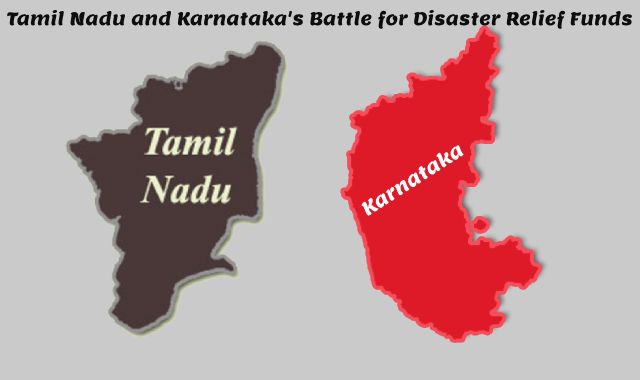
In recent times, the southern states of India, particularly Tamil Nadu and Karnataka, have found themselves entangled in legal battles with the Central Government over the release of National Disaster Relief Funds (NDRF). The Tamil Nadu Government's recent suit filed at the Supreme Court highlights the contention surrounding the alleged withholding of NDRF funds by the Centre following the aftermath of Cyclone Michaung and subsequent floods that ravaged the state in December 2023. Similarly, Karnataka has also voiced concerns, claiming that the Centre is denying crucial disaster relief funds necessary to aid drought-affected regions within the state.
How are States Assisted During a Natural Disaster?
In India, assistance during natural disasters is provided through various mechanisms established under the Disaster Management Act, 2005. This legislation defines a disaster as any significant event, whether natural or man-made, causing substantial loss of life, human suffering, property damage, or environmental degradation beyond the community's coping capacity. The Act laid the foundation for the establishment of the National Disaster Management Authority (NDMA) and State Disaster Management Authorities (SDMAs), which work in tandem with district-level authorities to form an integrated disaster management system.

Funds Allocation and Release Mechanisms
Funds for disaster relief are primarily sourced from two avenues: the State Disaster Relief Fund (SDRF) and the National Disaster Relief Fund (NDRF). The NDRF, formerly known as the National Calamity Contingency Fund (NCCF), is managed by the Central Government and is designated to meet expenses for emergency response, relief, and rehabilitation in the wake of any threatening disaster situation or disaster. It supplements the SDRF in cases of severe disasters when adequate funds are not available in the state's own relief fund.
The process of releasing funds from the NDRF involves several steps:
- Assistance Request: States lacking adequate funds in their SDRF can request assistance from the NDRF when faced with a national calamity beyond their coping capacity.
- Evaluation of the Situation: The Ministry of Home Affairs (MHA) or the Ministry of Agriculture evaluates the situation and decides on the need for additional assistance from the NDRF.
- Formation of Inter-Ministerial Central Team (IMCT): An IMCT is immediately formed to assess the affected areas and recommend whether additional funds are necessary.
- High-Level Committee Decision: A high-level committee, chaired by the Home Minister and comprising relevant central ministry secretaries, decides on the release of NDRF funds based on recommendations provided.
State Disaster Relief Fund: A Vital Resource
The State Disaster Relief Fund (SDRF), constituted under the Disaster Management Act, 2005, serves as the primary resource available to state governments for responding to notified disasters and providing immediate relief. Key aspects of the SDRF include:
- Contribution: The Centre contributes a significant portion of the SDRF allocation, with 75% for general category states and union territories and 90% for special category states and union territories.
- Disasters Covered: SDRF funds can be utilized for various disasters, including cyclones, droughts, earthquakes, floods, and more, as outlined by the Ministry of Home Affairs.
- Local Disasters: States have the flexibility to allocate up to 10% of the SDRF funds for providing immediate relief in response to local disasters not included in the Ministry of Home Affairs' notified list.
Conclusion
The legal battles between the Tamil Nadu and Karnataka Governments and the Central Government underscore the complexities and challenges surrounding the allocation and release of disaster relief funds. While the mechanisms such as the NDRF and SDRF aim to provide timely assistance to states during times of crisis, disputes over fund allocation highlight the need for greater clarity, transparency, and efficiency in the disaster management framework. As natural disasters continue to pose significant threats, ensuring the effective utilization of relief funds remains paramount in mitigating their impact on affected communities.



.jpg&w=256&q=75)



.jfif&w=256&q=75)