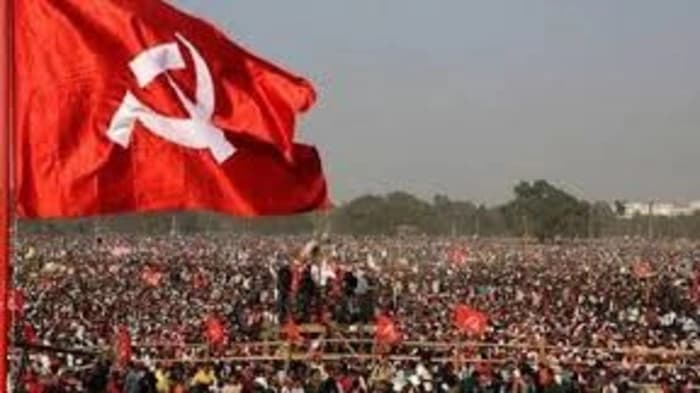
In mid‑September 2025, the Communist Party of India (Marxist) launched nationwide protests (Sept 17–22), decrying alleged communal polarisation, misuse of agencies, rollback of labor rights, and stripping of minorities’ freedoms.
The move underscores continuing tensions over political dissent, civil liberties, and governance.

Core Themes & Demands
The CPI(M) framed the protests around protecting constitutional rights, criticizing “aggressive communal polarization,” attacks on minorities, and misuse of agencies such as ED, NIA, CBI.
Demands include extension of MGNREGA to 200 days, introduction of an Urban Employment Guarantee, unemployment allowance, and reversal of labor deregulation.
The protests also target privatisation policies, centralizing tendencies, and fiscal neglect of states.
Significance & Impacts
Democratic expression: The protests reflect the role of opposition and civil society in holding power to account.
Policy discourse: The demands push debates on social security, redistribution, federalism and labor protections.
Political symbolism: The scale and framing of the protests signal mobilization capacity, especially in states where the Left has base.
Risks of polarization: Such protests may also intensify political rhetoric, leading to counter-mobilization.
Constraints & Critiques
Limited reach: In many areas, Left presence has weakened; mobilizing impact may be uneven.
Polarization risk: Agenda may be presented in binary political terms, reducing nuanced debate
Sustainability: Protests are episodic; sustaining pressure on governance requires institutional alternatives.
Accountability: Critics may target CPI(M)’s consistency, practicality of demands, or ideological rigidity.
Strategic Pathways
Issue-based alliances: Collaborate with civil society, where demands converge (e.g. labor rights, social security).
Policy articulation: Provide detailed white papers, alternative policy frameworks rather than purely rhetoric.
Democratic institutionalism: Engage in legislative, electoral, and grassroots channels alongside protests.
Public engagement: Use media, social communication, public discussions to broaden appeal beyond base.
Conclusion
The CPI(M)’s nationwide protests in 2025 reflect enduring tensions in Indian democracy: centralization, accountability, socio‑economic justice, and civil liberties. While protests are necessary, meaningful change also requires policy articulation, coalition building, and institutional leverage.