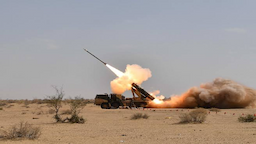
India is expanding the role of private companies in missile manufacturing to strengthen production capacity, create additional wartime supply options and improve efficiency in the defence industrial sector, according to a report by India Narrative.
The move is aimed at addressing the gap between developing advanced missile systems and producing them at the scale required to replenish inventories during prolonged conflicts.

According to the report, the Defence Ministry is planning to have at least two production partners for each missile system, reducing dependence on a single manufacturing source and creating greater redundancy during wartime.
Greater participation by private companies could also introduce competition into the sector, potentially improving price discovery, delivery timelines and production efficiency, the report said.
The shift comes as India seeks to broaden the industrial base supporting its defence requirements. Historically, missile production has been dominated by public-sector organisations, with DRDO-developed systems largely being transferred to nominated production agencies, particularly Bharat Dynamics Limited (BDL).
In August, the Defence Ministry approved the transfer of DRDO technologies for conventional missile systems to qualified Indian defence companies.
Under the new framework, private companies can bid for technology transfer, obtain designation as Development-cum-Production Partners (DcPPs) and take on prime systems-integration responsibilities.
The policy represents a change from the earlier model in which DRDO-designed missile systems were predominantly transferred to designated public-sector production agencies.
The report said the ability to manufacture and replenish weapons during a prolonged conflict is an important component of a country's defence preparedness.
“Strategic deterrence ultimately depends not only on what a country can design but also on what it can manufacture, replenish and sustain during a prolonged conflict,” it said.
The report also stressed that greater private-sector participation does not imply a reduced role for public-sector manufacturers.
“BDL remains India’s most experienced missile manufacturer, with established infrastructure, expertise and supplier networks,” it noted.
The introduction of private competition means public-sector companies will no longer automatically receive production opportunities for every DRDO-developed missile system, according to the report.
The emerging framework could also encourage new forms of collaboration between public- and private-sector companies, with firms potentially specialising in different components of increasingly complex weapons systems.
The policy shift is therefore intended to widen India’s missile manufacturing base while creating multiple production pathways for critical defence systems.