Central Innovation: The apparatus employs a silicon-based photoanode featuring n-i-p heterojunction structure, consisting of:
- n-type titanium dioxide
- undoped intrinsic Si
- p-type NiO
Fabrication: Achieved via magnetron sputtering, a scalable and industry-ready technique.

This innovative gadget features great efficiency, minimal energy requirements, strong durability, and economical materials.
What is hydrogen?
Hydrogen is the chemical element represented by the symbol H and has the atomic number 1.
Hydrogen is the lightest element and the most plentiful chemical substance in the universe, making up about 75% of all regular matter.
It is a colorless, odorless, tasteless, non-toxic, and extremely flammable gas.
What is Green Hydrogen?
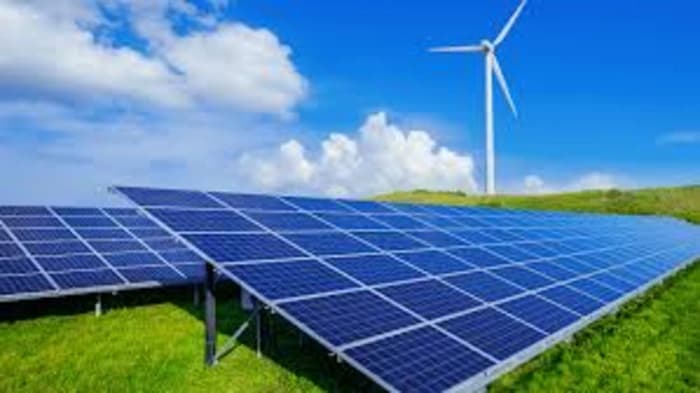
Green Hydrogen: Hydrogen created through electrolysis, which involves separating water into hydrogen and oxygen using electricity from renewable energy sources like solar or wind, is referred to as Green hydrogen.
MNRE characterizes Green Hydrogen as having a well-to-gate emission of no more than 2 kg CO2 equivalent per kg of H2, which includes processes such as water treatment, electrolysis, gas purification, drying, and hydrogen compression.
Gujarat's Kandla port is the first in India to operate a Green Hydrogen plant utilizing locally developed Electrolysers.
Importance of Green Hydrogen
Energy Security: As the third-largest consumer of oil and the fourth-largest importer of crude oil, India will rely heavily on hydrogen technology to decrease this dependence.
Industrial Decarbonization: Can substitute fossil fuels in difficult-to-decarbonize industries – steel, cement, ammonia, refineries.
Clean Mobility: Energizing fuel cell cars, locomotives, and vessels.
Grid Stability: Functions as an energy reservoir for variable renewable sources.
Difficulties
Hazards linked to transportation: Hydrogen in its gaseous state is extremely flammable and challenging to transport, thus making safety a top priority.
Elevated Production Expenses: The levelized cost of electricity (LCOE) and electrolyzer expenses are significant contributors to the increased total production costs.
Difference in Production Expenses: There is a significant difference between the production costs of green hydrogen ($5.30- $6.70 per kg) and those of traditional grey/blue hydrogen ($1.9-$2.4 per kg).
Technological Preparedness: The rates of adoption and associated risks of advanced technologies present obstacles for funding and increasing production.
Initiatives by the government for Green Hydrogen
National Green Hydrogen Initiative: This initiative was initiated in 2023 with a budget of Rs. 19,744 crores. It provides a detailed plan to:
Recognize and Generate demand in possible industries
Offer production subsidies for establishing local capacity.
Produce 5 million metric tonnes of green hydrogen by 2030.
Preventing close to 50 MMT of CO2 emissions each year.
Draw in investments totaling around USD 100 billion.
Create more than 600,000 positions.
The Green Hydrogen Certification Scheme is a system created to guarantee the reliable and clear certification of green hydrogen manufacturing in India.
The Ministry of Environment, Forest and Climate Change has exempted plants producing Green Hydrogen and Green Ammonia from Environmental Clearance.
Advancement
The initial set of three heavy-duty trucks fueled by hydrogen will function on the routes from Faridabad to Delhi NCR and Ahmedabad to Surat to Vadodara.
To facilitate this shift, Indian Oil Corporation Limited (IOCL) is setting up hydrogen refueling stations in Faridabad, Vadodara, Pune, and Balasore.
The Ministry of Ports, Shipping and Waterways (MoPSW) has identified three key ports—Kandla, Paradip, and Tuticorin—for development as Green Hydrogen hubs.
India's achievement in creating a solar-driven green hydrogen device marks the start of a significant shift towards a decarbonised economy.




.jfif&w=256&q=75)



.jpg&w=256&q=75)
.jpg&w=256&q=75)
.webp&w=256&q=75)
.jpg&w=256&q=75)