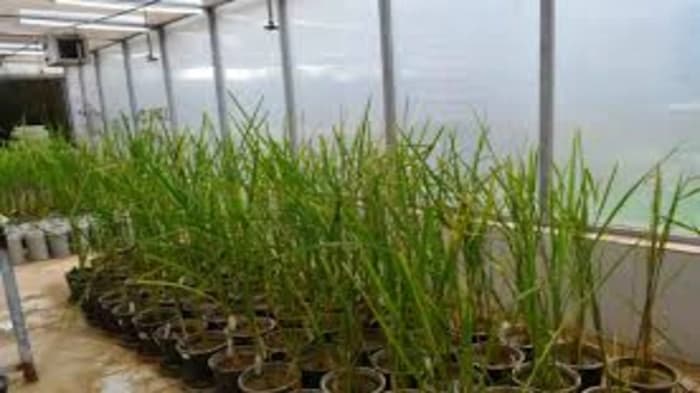
Researchers at the National Institute of Plant Genome Research (NIPGR) have utilized CRISPR-Cas9 gene-editing to improve phosphate absorption in japonica rice, resulting in a 20–40% boost in yield with regulated phosphate application

What is Japonica Rice?
Japonica rice is a high-starch, short-grain type of rice mainly cultivated in East Asia, commonly utilized in breeding studies because of its simple genetic modification and consistent traits in regulated settings.

Created By:
Created by NIPGR, New Delhi, utilizing CRISPR-Cas9 gene modification.
Study released in the Plant Biotechnology Journal
Cultivar utilized: Nipponbare (a representative japonica type)
How Was It Created?
Target Gene Identified: OsPHO1;2, a phosphate transporter transferring phosphorus from roots to shoots.
Repressor Identified: OsWRKY6, an inhibitor of this transporter
First Strategy Unsuccessful: Disabling the repressor affected other functions in the plant.
Exact Editing: Only the 30 base-pair binding sites of the repressor were eliminated utilizing CRISPR.
Result: Enhanced phosphate transport to the shoot, resulting in improved seed formation.
Essential Characteristics of Gene-Modified Japonica Rice:
20% increased output with the complete fertilizer amount and a 40% yield boost with just 10% of the suggested phosphate.
Enhanced phosphate uptake resulting from better transporter stimulation.
Increased panicles and seeds, with seed quality and size staying consistent.
No foreign DNA in the final generation; eliminated through Mendelian segregation.
No unintended effects observed; confirmed with leading genome-prediction tools.
Effectively replicates minimally invasive promoter gene surgery.

Patriarchal Bargain: How Women Are Challenging Restrictions in the Name of Safety
El Niño 2026: India Faces Growing Risks of Drought, Food Inflation and Water Stress

Rig Veda’s Female Voices: Can They Be Considered Women Poets?

Navi Pillay Wins 2026 Nobel Peace Prize for Advancing Human Rights and International Justice

IISc’s TANUH Uses Artificial Intelligence to Strengthen Healthcare in India
.jpg&w=256&q=75)
University of Arizona suspends fraternity activities as misconduct reports mount
.jpg&w=256&q=75)
Cornell rape accuser was misled about criminal probe, lawyer alleges
.webp&w=256&q=75)
Over 1,000 US colleges fail to submit student outcomes data by deadline

Inside the 382nd Report: Every Recommendation Parliament's Panel Made on NTA After the NEET Leak
.jpg&w=256&q=75)
IIM Ahmedabad, IESE and HEC Montréal chiefs join global EQUIS Accreditation Board

Patriarchal Bargain: How Women Are Challenging Restrictions in the Name of Safety
El Niño 2026: India Faces Growing Risks of Drought, Food Inflation and Water Stress

Rig Veda’s Female Voices: Can They Be Considered Women Poets?

Navi Pillay Wins 2026 Nobel Peace Prize for Advancing Human Rights and International Justice

IISc’s TANUH Uses Artificial Intelligence to Strengthen Healthcare in India
.jpg&w=256&q=75)
University of Arizona suspends fraternity activities as misconduct reports mount
.jpg&w=256&q=75)
Cornell rape accuser was misled about criminal probe, lawyer alleges
.webp&w=256&q=75)
Over 1,000 US colleges fail to submit student outcomes data by deadline

Inside the 382nd Report: Every Recommendation Parliament's Panel Made on NTA After the NEET Leak
.jpg&w=256&q=75)
IIM Ahmedabad, IESE and HEC Montréal chiefs join global EQUIS Accreditation Board
Copyright© educationpost.in 2024 All Rights Reserved.
Designed and Developed by @Pyndertech