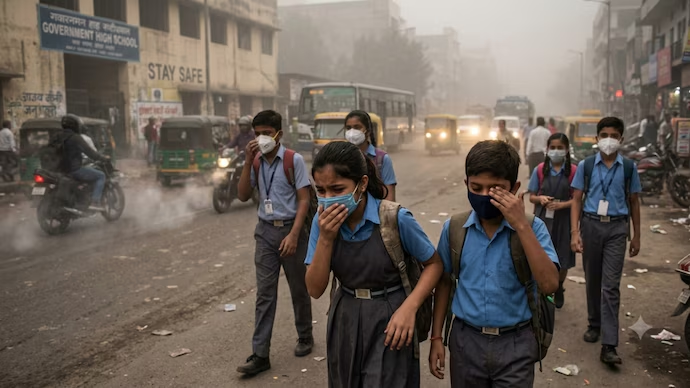
The advent of the Industrial Revolutions, catalyzed by the discovery and utilization of hydrocarbons, has undeniably propelled human progress. However, the indiscriminate use of these compounds has resulted in environmental degradation, contributing significantly to global warming and climate change. As the world grapples with the consequences of carbon emissions, there is an urgent need to explore less harmful ways of harnessing hydrocarbons while ensuring sustainable development.
Understanding Hydrocarbons: Formation, Types, and Storage
Hydrocarbons, organic compounds composed of hydrogen and carbon, serve as the backbone of the modern industrial era. They are found naturally in plants, trees, and fossil fuels, with crude oil and natural gas being primary sources. These compounds are classified into various types based on their structure and bonding, including alkanes, alkenes, alkynes, and aromatic hydrocarbons. The formation of hydrocarbon reservoirs occurs over millions of years through the burial and transformation of organic matter under specific geological conditions.

Accessing and Extracting Hydrocarbons: Challenges and Processes
Hydrocarbon exploration involves creating production wells to access reservoirs buried deep within the Earth's crust. This process includes drilling, casing, cementing, and blowout prevention measures to ensure safe and efficient extraction. Once accessed, hydrocarbons are extracted through primary, secondary, and tertiary phases, utilizing natural pressure differentials and enhanced recovery methods. However, the extraction process poses environmental risks, including groundwater contamination and methane emissions.
Policy Frameworks and Sustainable Practices
In response to environmental concerns and the imperative for sustainable development, governments worldwide are reevaluating their policies on hydrocarbon extraction. In India, the Hydrocarbon Exploration and Licensing Policy (HELP) aims to enhance domestic oil and gas production while promoting transparency and reducing administrative discretion. The policy emphasizes intensified exploration activities, tax breaks, pricing flexibility, and market freedom to attract investment and accelerate production. Additionally, the Open Acreage Licensing Programme (OLAP) facilitates exploration by providing companies with data and discretion to explore areas of their choice.
Towards a Sustainable Future: Balancing Development and Environmental Conservation
As the world transitions towards renewable energy sources, the responsible utilization of hydrocarbons remains paramount in meeting global energy demands while mitigating environmental impacts. Strategies such as carbon capture and storage (CCS), enhanced oil recovery (EOR), and methane emissions reduction can help minimize the carbon footprint of hydrocarbon extraction and utilization. Moreover, investments in research and development of alternative fuels, energy efficiency measures, and sustainable practices are essential for achieving a greener and more sustainable future.
In conclusion, the quest for sustainable hydrocarbon utilization necessitates a multi-faceted approach encompassing policy reforms, technological innovation, and societal engagement. By embracing cleaner extraction methods, promoting energy efficiency, and investing in renewable energy alternatives, we can pave the way towards a more sustainable and resilient future for generations to come.



.jpg&w=256&q=75)



.jfif&w=256&q=75)