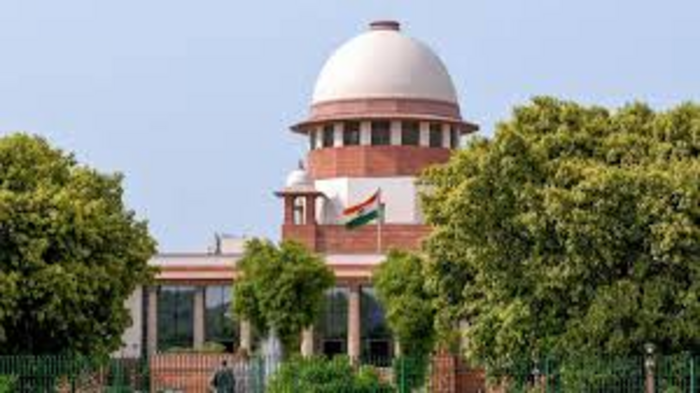
The Supreme Court of India has scheduled May 5, 2026, for the final hearing of petitions challenging the constitutional validity of the Citizenship Amendment Act, 2019. More than 243 petitions have been filed before the Court, making it one of the most significant constitutional cases in recent years. The petitions challenge the provisions of the Act on grounds of equality, secularism, and constitutional principles.
The Citizenship Amendment Act, 2019 provides a pathway to Indian citizenship for persecuted minorities—Hindus, Sikhs, Buddhists, Jains, Parsis, and Christians—from Pakistan, Afghanistan, and Bangladesh who entered India before December 31, 2014. The government has argued that the Act is a humanitarian measure aimed at protecting vulnerable religious minorities facing persecution in neighboring countries.

However, several petitioners have challenged the Act, arguing that it violates Article 14 of the Constitution, which guarantees equality before the law. Critics contend that the Act discriminates on the basis of religion by excluding certain groups, particularly Muslims, from its provisions. The case also raises broader constitutional questions about secularism, citizenship policy, and the scope of Parliament’s legislative powers.
The Supreme Court’s decision in this case will have far-reaching implications for constitutional law, citizenship rights, and India’s legal framework. The Court will examine whether the Act complies with fundamental rights and constitutional values, including equality, non-discrimination, and secularism.
This case is significant for both governance and polity, as it will clarify the constitutional validity of a major legislative reform. The judgment will also reinforce the role of the judiciary in reviewing laws and protecting constitutional principles.
Overall, the upcoming hearing represents a crucial moment in India’s constitutional history, with important implications for citizenship, legal interpretation, and democratic governance.