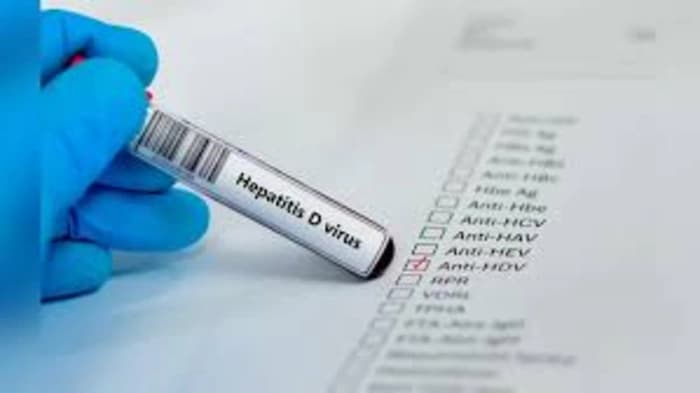
The World Health Organization (WHO) and the International Agency for Research on Cancer (IARC) have formally categorized the Hepatitis D virus (HDV) as carcinogenic, classifying it in Group 1 — recognized causes of liver cancer, together with Hepatitis B and C

What is the Hepatitis D Virus (HDV)?
Hepatitis D is a viral infection transmitted through blood that needs the Hepatitis B virus (HBV) to reproduce.

HDV cannot live on its own and appears as co-infection (at the same time as HBV) or superinfection (following an existing HBV).
Who Determined It to Be Carcinogenic?
Grouped by:
WHO (World Health Organization)
IARC (International Agency for Cancer Research)
Essential Characteristics of Hepatitis D and HBV Infection:
Impacts close to 12 million individuals, or approximately 5% of chronic HBV carriers worldwide.
Widespread occurrence in Asia, Africa, and the Amazon Basin. It likewise influences individuals who use injection drugs and those on dialysis.
Symptoms: Tiredness, yellowing of the skin, queasiness, stomach pain, dark-colored urine — frequently overlooked or incorrectly diagnosed.
Transmission: Via contaminated blood, unprotected sexual activity, unsafe injections, and vertical transmission (from mother to child).
Why HDV is Considered Cancer-Inducing?
Deteriorates HBV Results: Co-infection raises liver cancer risk by 2–6 times compared to HBV by itself.
Quick Liver Injury: As many as 75% progress to cirrhosis within 15 years, while only 50% do so in HBV-only instances.
Rapid Advancement: Accelerated onset of fibrosis and liver failure in younger demographics.
HDV takes control of HBV's replication system, increasing both viral and oncogenic levels.
Therapeutic Environment:
There is no vaccine specific to HDV, and the HBV vaccine is the sole preventive approach for both.
Bulevirtide (authorized in Europe) demonstrates potential when combined with pegylated interferon.
Lifelong antiviral treatment for HBV and therapies for HDV remain costly and restricted.
WHO highlights significant deficiencies in testing:
Just 13% of HBV and 36% of HCV cases have been identified.
Treatment rates are as low as 3% for HBV and 20% for HCV according to 2022 data.

India, Bangladesh discuss Sundarbans conservation, land erosion and tiger monitoring

Rahul Gandhi seeks Maharashtra CM’s intervention over Adivasi students’ hostel grievances

CJP announces Delhi march in Sep, accuses Modi govt of not fulfilling commitments made to Gen Z

Vladimir Putin looks forward to meeting PM Modi ‘very soon’ at SCO Summit, conveys greetings through EAM Jaishankar

Fake airline job racket busted in Delhi, six arrested for duping job aspirants

CJP announces Delhi march in Sep, accuses Modi govt of not fulfilling commitments made to Gen Z

Heavy rain disrupts Delhi flights, at least 15 diverted amid thunderstorms

SC seeks response on plea for CBI probe into Jharkhand civil services exam irregularities

NSA Ajit Doval in Beijing for India-China border talks amid Arunachal face-off

Haryana launches school campaign to educate students on POCSO, cyber safety

India, Bangladesh discuss Sundarbans conservation, land erosion and tiger monitoring

Rahul Gandhi seeks Maharashtra CM’s intervention over Adivasi students’ hostel grievances

CJP announces Delhi march in Sep, accuses Modi govt of not fulfilling commitments made to Gen Z

Vladimir Putin looks forward to meeting PM Modi ‘very soon’ at SCO Summit, conveys greetings through EAM Jaishankar

Fake airline job racket busted in Delhi, six arrested for duping job aspirants

CJP announces Delhi march in Sep, accuses Modi govt of not fulfilling commitments made to Gen Z

Heavy rain disrupts Delhi flights, at least 15 diverted amid thunderstorms

SC seeks response on plea for CBI probe into Jharkhand civil services exam irregularities

NSA Ajit Doval in Beijing for India-China border talks amid Arunachal face-off

Haryana launches school campaign to educate students on POCSO, cyber safety
Copyright© educationpost.in 2024 All Rights Reserved.
Designed and Developed by @Pyndertech