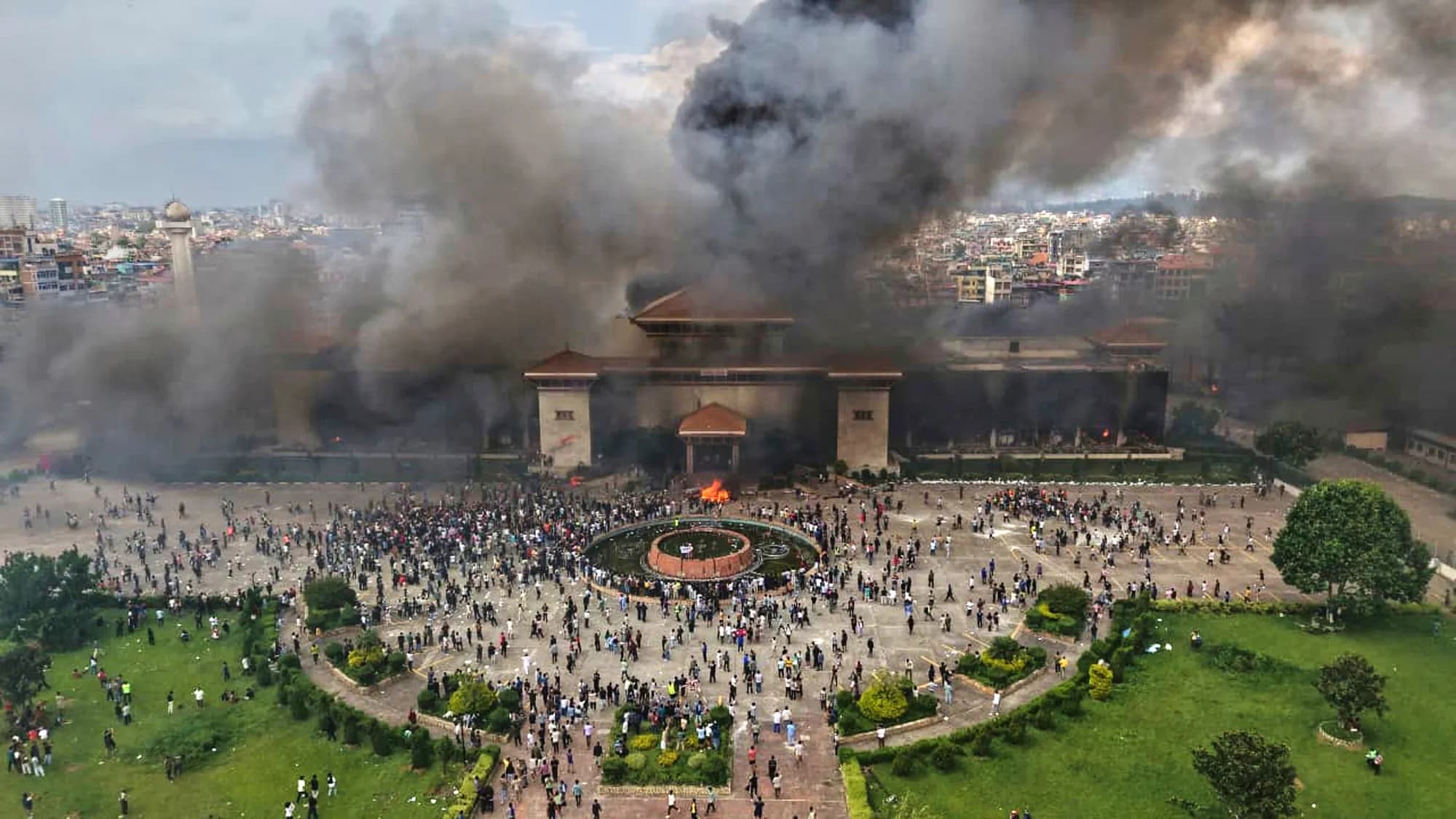
Nepal is witnessing a fresh wave of Gen Z–led protests, signalling a revival of youth activism amid growing political and economic uncertainty. The renewed mobilisation has prompted authorities to impose a curfew in Bara district, after demonstrations escalated and security concerns intensified.
Source: The Indian Express
The protests, largely driven by young citizens born after the 2006 democratic transition, reflect deep dissatisfaction with the current political order. Their demands span a range of issues—unemployment, rising living costs, corruption, and what they perceive as chronic misgovernance by an ageing political elite unable to deliver on promises of stability and development. The resurgence of these demonstrations highlights a widening disconnect between Nepal’s youth and its traditional political structures.

Drivers of Youth Mobilisation
Gen Z in Nepal—highly connected through social media—has become increasingly vocal about economic hardships and lack of opportunities. Many feel marginalised in policymaking and disillusioned with frequent government instability, including rapid changes in coalitions and leadership. The protests are also influenced by global youth movements that use non-traditional political spaces to demand accountability.
The state’s response, including the curfew and heightened security deployment, shows growing concern over the protests’ potential to disrupt governance and spread to other regions.
Implications for Nepal’s Democratic Landscape
- Political Volatility Ahead of Elections: With the next national elections scheduled for March 2026, the unrest raises fears about pre-election instability and erosion of public trust in democratic institutions.
- Youth as a Political Force: The mobilisation suggests that young voters could significantly influence electoral outcomes, potentially reshaping party strategies.
- Democratic Fragility: Recurring protests reflect underlying structural issues—weak institutions, limited economic resilience, and persistent factionalism.
As Nepal navigates this turbulent phase, the Gen Z protests underscore the pressing need for economic reforms, responsive governance, and meaningful youth participation to preserve democratic stability.