An Overview of the Arctic
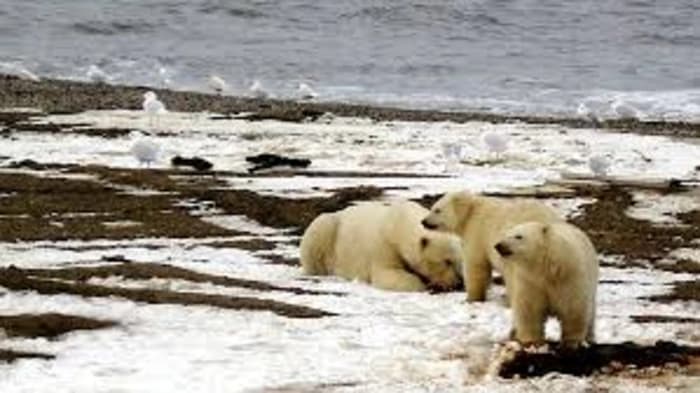
The Arctic Region, which includes the northernmost parts of the planet, is one of the most fragile and important ecosystems on the planet. This area encompasses the Arctic Ocean as well as areas that are part of the United States (Alaska), Canada, Russia, Greenland, Norway, Sweden, Finland, and Iceland. The rate of warming in the Arctic is almost four times faster than the global average, which is causing major economic and environmental changes that have an impact on policies and territorial disputes.

Important Causes of Geopolitical Tensions in the Arctic Natural Resources According to the U.S. Geological Survey, the Arctic Region is home to about 30% of the world's natural gas reserves and 13% of its undiscovered oil reserves. These resources are becoming more accessible as ice caps continue to melt, which is escalating competition among countries keen to take advantage of them.
New Navigational Routes: Alternatives to the Suez and Panama Canals are becoming more and more feasible, including the Northwest Passage and the Northern Sea Route (NSR). By cutting trade distances between Asia and Europe by 8,000 kilometers, the Northeast Passage along Russia's Arctic coastline could drastically cut costs.
The Northwest Passage, a possible shipping route through Canada's Arctic archipelago, is still a controversial topic. The United States argues for its status as an international strait, supporting freedom of navigation, while Canada claims it as internal waters.
Geopolitical Repercussions
The United Nations Convention on the Law of the Sea (UNCLOS): Countries may assert claims to the seafloor outside of the 200-nautical-mile Exclusive Economic Zone (EEZ) under UNCLOS if they can show that the region is a logical extension of their continental shelf. In line with UNCLOS, claims to increase their seabed sovereignty have been made by Denmark (through Greenland), Canada, and Russia. It is difficult for the United States to make its claims because it has not ratified UNCLOS.
In the meantime, Russia has challenged Western interests by using military positioning and legal tactics to support its claims. Addressing these issues is a key function of the Arctic Council, which is made up of eight countries: the United States, Canada, Russia, Denmark, Norway, Sweden, Finland, and Iceland.
The Role of India in Arctic Research
India actively participates in Arctic research projects despite not being an Arctic country. The National Centre for Polar and Ocean Research (NCPOR) supports scientific research on glacial movements, marine biodiversity, and climate trends. In order to promote collaborations for sustainable development, the Ministry of Earth Science developed India's Arctic Policy, known as "India and the Arctic." In order to study Arctic climate systems and their global impacts, India founded the Himadri research station in Svalbard, Norway, in 2008.






.jfif&w=256&q=75)




.webp&w=256&q=75)