Trickle-down economics is an economic theory which posits that benefits provided to the wealthy or corporations eventually “trickle down” to lower-income groups through investment, employment, and consumption. It often justifies tax incentives, subsidies, or deregulation for businesses with the expectation that growth at the top leads to widespread prosperity.
Globally, this approach has faced scrutiny for failing to address structural inequality, with critics arguing that wealth often accumulates without benefiting marginalized populations.

Indian Context: Corporate Incentives vs Welfare Program Reductions
In India, recent policy measures such as corporate tax cuts, production-linked incentive schemes, and investment-friendly reforms reflect elements of trickle-down thinking. These are designed to stimulate industrial growth, attract foreign investment, and create jobs.
However, the implementation has coincided with flat or reduced allocations to welfare programmes targeting the poor, including rural employment schemes, public healthcare, and social security nets. Analysts note that while urban industrial sectors flourish, marginalised communities often face exclusion, leading to regional and socio-economic disparities.
Critique: Displacement, Exclusion, and Inequality
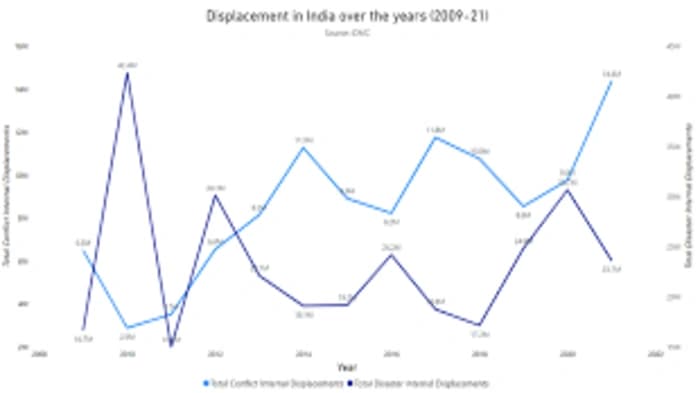
The trickle-down model in India has produced mixed results. Industrial projects and infrastructure development have sometimes displaced local communities, particularly indigenous populations, without adequate rehabilitation or compensation.
Moreover, the benefits of high-end economic growth are concentrated among urban elites, widening income and asset inequality. Women, informal sector workers, and small-scale farmers often remain marginalised, highlighting the limitations of growth-first strategies in a diverse socio-economic landscape.
Way Forward: Inclusive Growth Frameworks
Experts recommend integrating trickle-down policies with inclusive growth mechanisms. Key measures include:
Targeted social security and welfare schemes for vulnerable populations.
Skill development and employment generation linked to industrial growth.
Transparent land acquisition and rehabilitation policies to reduce displacement impacts.
Progressive taxation and wealth redistribution to ensure benefits are shared broadly.
A calibrated approach, combining growth-oriented incentives with robust social protection, can enable India to achieve equitable development without marginalising communities.
Conclusion
While trickle-down economics offers potential for rapid industrial growth, India’s experience demonstrates that without inclusivity and targeted interventions, economic benefits remain concentrated, exacerbating inequality and social exclusion. A balanced growth model that aligns corporate incentives with welfare imperatives is critical for sustainable and equitable development.




.jpg&w=256&q=75)





.jpg&w=256&q=75)