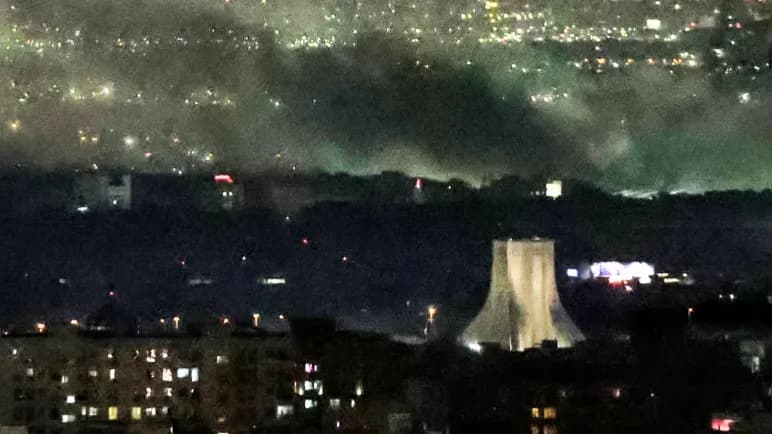
Tehran endured one of the most harrowing nights since the war began 10 days ago, as United States and Israeli warplanes pounded the city with dozens of heavy explosives, shaking neighborhoods and terrifying residents across the sprawling metropolis of over 10 million.
The latest wave of strikes follows March 8 night’s bombing of fuel reserves, which sent thick plumes of smoke into the sky, turning day into night and leaving parts of the capital shrouded in hazardous black clouds.

Overnight, fighter jets flew at low altitudes, unleashing rounds of bombs that shook buildings, shattered windows, and rattled the nerves of families who took shelter in bathrooms and basements. “It felt like tens of jets were flying right above our heads for 15 minutes straight,” said Sima, a 38-year-old resident of western Tehran, describing the terrifying assault. “The ground and windows and our hearts were shaking, but we got through it.”
The strikes did not spare other major cities. Local media reported further attacks on Isfahan and Karaj, while US Defense Secretary Pete Hegseth warned March 10 would mark “our most intense day of strikes inside Iran.”
Civilians trapped in darkness and silence
Amid the bombardment, Tehran residents struggled with a near-total internet blackout, now in its 11th day, which has limited communications and left citizens reliant on slow, costly VPNs and proxy services. NetBlocks described the shutdown as “among the most severe government-imposed nationwide internet shutdowns on record globally,” second only to January’s 20-day blackout during nationwide protests.
“I kept my front door unlocked to run to the underground parking if necessary,” said Alireza, 25, a central Tehran resident. “I’ve been endlessly checking with friends and family to see what’s been hit. There’s almost no reliable information.”
Satellite signals, GPS, and foreign Persian-language channels have also been disrupted, while authorities warned that sharing footage of the bombings with foreign media could result in harsh punishment, including asset confiscation and execution.
City life persists amid war and economic strain
Despite the devastation, Tehran’s economy limps on. Some shopkeepers in downtown areas operate limited hours, taxi drivers and couriers continue work, and car washes saw a surge in business after the bombing of fuel facilities created oil-laden rain. Long queues remain at petrol stations, and residents limit travel due to security threats near police and government buildings.
Iranian authorities reported extensive damage to residential areas, hospitals, schools, and historical sites, appealing to the international community over civilian harm. With Nowruz approaching on March 20, the government is scrambling to secure food, medicine, and essentials, while inflation hovers near 70%, straining households already under sanctions and economic mismanagement.
Cyber threats persist alongside physical attacks. State outlets reported thwarting major cyber attacks targeting banks and the top cryptocurrency exchange early March 10, echoing patterns seen during last year’s 12-day conflict with Israel.
As Tehran reels under airstrikes, blackout, and economic pressures, residents brace for what appears to be an intensifying chapter of a war that has already reshaped daily life and deepened the nation’s humanitarian crisis.




.jpg&w=256&q=75)





.jpg&w=256&q=75)
