Iran has threatened to target oil and gas facilities across the Gulf region following strikes on its South Pars gasfield, in what marks a significant escalation in the ongoing war involving the US and Israel.
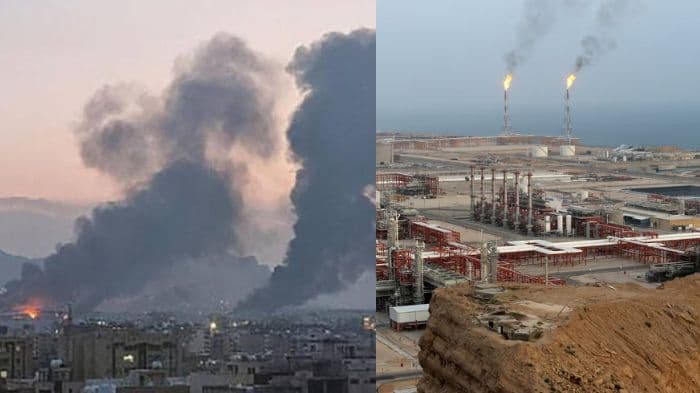
The warning came after Iranian authorities said key infrastructure at the South Pars field — the world’s largest natural gas reserve — was hit in an attack, triggering fires and forcing parts of the facility offline.

Tehran said it would retaliate by striking energy installations in neighbouring countries, including Saudi Arabia, the United Arab Emirates and Qatar, and urged civilians to stay away from such sites.
Officials described the strike on South Pars as a major escalation, noting that it was the first direct attack on Iran’s upstream energy production since the conflict began.
South Pars, known as the North Field in Qatar, is the world’s largest natural gas reserve. The offshore field, located in the Persian Gulf and shared between Iran and Qatar, holds an estimated 1,800 trillion cubic feet of in-situ gas along with significant condensate reserves, making it central to global energy supply chains.
It is central to Iran’s domestic energy supply, and any disruption is likely to have wider economic consequences. The attack also heightened concerns about the security of global energy flows, particularly through the strategically critical Strait of Hormuz.
The threat of retaliation has already rattled global markets, with oil prices rising sharply amid fears that key Gulf energy infrastructure could become targets in the conflict.
The development also raises concerns over the security of the Strait of Hormuz, a key transit route for global oil and gas shipments, as the conflict increasingly targets energy assets.




.jpg&w=256&q=75)





.jpg&w=256&q=75)
