Iran and the United States have traded sharp claims over an alleged mid-air strike, with Tehran asserting it shot down an American fighter jet near its southeastern coast—an assertion swiftly denied by Washington, underscoring a widening information battle alongside an intensifying military confrontation.
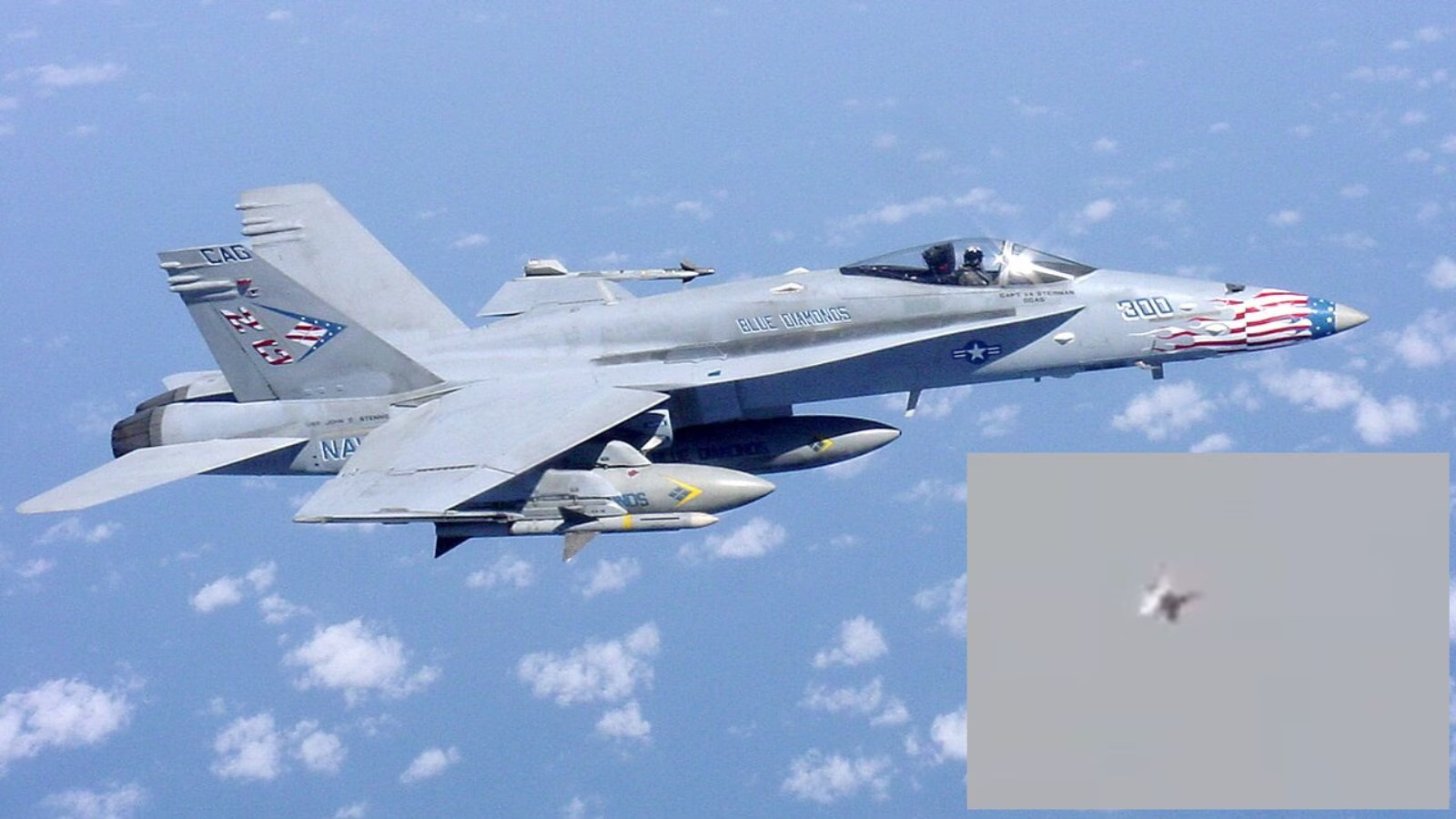
The Islamic Revolutionary Guard Corps (IRGC) claimed it had downed a US F/A-18 fighter jet using an advanced air defense system near Chabahar, a strategic coastal hub along the Gulf of Oman. Iranian authorities also released a video purportedly showing the strike, which has since circulated widely online, though it remains unverified by independent sources.

The United States Central Command (CENTCOM) categorically dismissed the claim, calling it “false and misleading.” In a statement posted on X, the command said: “No U.S. fighter aircraft have been shot down by Iran,” directly countering Tehran’s narrative without offering further operational details.
The episode reflects not just rising hostilities on the ground, but a parallel contest over perception and credibility as tensions spiral across West Asia.
Diplomatic signals amid deepening conflict
The exchange comes at a time when backchannel diplomacy appears to be running in parallel with military escalation. Iran has indicated it is reviewing a US-backed proposal aimed at ending the conflict but remains reluctant to enter direct negotiations.
Iranian Foreign Minister Abbas Araghchi said communication through intermediaries should not be interpreted as formal talks with Washington. Criticizing Western positions, he remarked that international law is being undermined by “double standards,” referencing conflicts in Gaza and Ukraine.
According to Reuters, Tehran has also conveyed through mediators that any ceasefire framework must include Lebanon, signaling a broader regional dimension to its negotiating stance.
Trump signals deal, warns of escalation
US President Donald Trump said Iranian leadership is interested in striking a deal but constrained by domestic pressures. “They want to make a deal so badly, but they’re afraid to say it,” he said, suggesting internal political risks for Tehran.
A US proposal—reportedly conveyed via Pakistan—includes demands that Iran dismantle its stockpile of highly enriched uranium, halt enrichment activities, curb its ballistic missile program and reduce support for regional allies.
White House Press Secretary Karoline Leavitt issued a stark warning, saying Washington could intensify military action if Iran does not accept US terms.
Military claims escalate across region
Amid the rhetoric, military operations continue to intensify. Admiral Brad Cooper, overseeing CENTCOM operations, said US forces have struck over 10,000 targets inside Iran, claiming that 92% of its major naval assets have been destroyed and that missile and drone launches have dropped by more than 90%.
Despite these assertions, the conflict shows no signs of slowing. Air strikes on Iranian infrastructure persist, while Tehran continues missile and drone attacks targeting Israel and US-aligned forces.
Iran has also warned it could expand the conflict to critical maritime chokepoints such as the Bab al-Mandab Strait, raising concerns over global shipping routes. Meanwhile, countries including Saudi Arabia and Kuwait have reported intercepting drone attacks, highlighting the widening regional fallout.
As competing claims persist and diplomacy struggles to gain traction, the episode underscores how modern conflict is being fought not just with missiles and jets, but with narratives shaping global perception.




.jpg&w=256&q=75)





.jpg&w=256&q=75)
