India’s two biggest airlines, IndiGo and Air India, along with Air India Express, are set to withdraw nearly 250 domestic flights daily from June to August as rising fuel prices and weakening travel demand squeeze airline operations. The cuts come at a time when domestic airfares have already surged sharply, adding pressure on summer travellers.
The reduction in flights is expected to hit passengers during one of the busiest travel periods of the year, when families typically fly for vacations and leisure trips across the country.

Air India will reduce nearly 22% of its domestic operations during June and July. The airline currently operates around 500 domestic flights every day, which means nearly 110 daily services will be withdrawn.
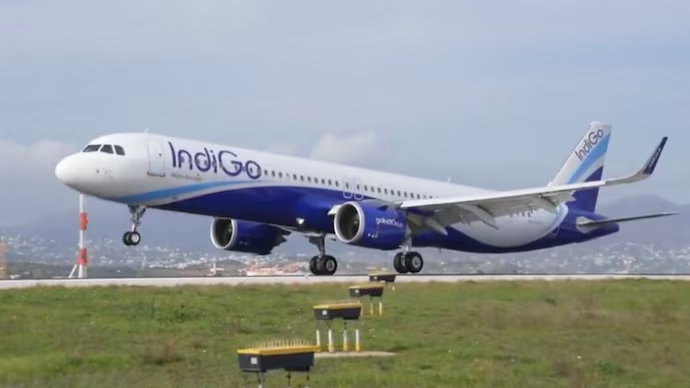
IndiGo, which operates roughly 2,200 flights a day, is trimming domestic capacity by 5-7%, translating into around 110 fewer flights daily.
Air India Express, the low-cost subsidiary of Air India, is also cutting nearly 10% of its domestic network, affecting a significant portion of its approximately 340 daily flights.
Mumbai, Delhi, Bengaluru among worst affected
The biggest impact will be felt in Mumbai, Delhi and Bengaluru, the country’s busiest aviation hubs, where both business and leisure routes are seeing reduced frequencies.
Passengers travelling from Mumbai will face fewer flights to Jaipur, Goa, Bengaluru, Hyderabad, Chennai, Ahmedabad, Nagpur, Patna and Bhopal.
From Delhi, services to Goa, Mumbai, Bengaluru, Hyderabad, Chennai, Ahmedabad, Lucknow, Kochi and Kolkata are being scaled back. Bengaluru is also expected to witness ripple effects as return frequencies on several key routes decline.
The reduced schedules are likely to make peak-hour travel more crowded and limit flight options for passengers across major sectors.
Fuel prices and weak demand behind cuts
Airlines say soaring aviation turbine fuel (ATF) prices remain the biggest reason behind the cuts. Domestic ATF prices have risen nearly 25%, while international fuel costs have climbed even higher amid tensions and conflict in West Asia.
Fuel accounts for a major share of airline operating expenses, forcing carriers to rationalise services and reduce capacity. Airlines are also seeing signs of softer travel demand, particularly after the peak summer rush, as consumers cut discretionary spending.
Exactly a month ago, India’s aviation industry had sought urgent government intervention over mounting fuel costs that were beginning to strain operations.
Air India described the reductions as a temporary measure driven by elevated fuel prices and said it would continue monitoring market conditions and passenger demand closely.
IndiGo, meanwhile, cited softer demand during the post-summer lean season as a key reason behind its 5-7% reduction in domestic capacity.
Airfares already up by 30%
The capacity cuts are expected to push fares even higher over the coming months.
Ticket prices on several domestic routes have already increased by nearly 30% in recent weeks. Airlines have also imposed fuel surcharges of ₹400-450 per passenger to offset rising ATF costs.
With fewer seats available on major routes connecting Mumbai, Delhi and Bengaluru, passengers could face steeper fares and limited booking options through August.
Airlines, however, have begun restoring some international services to West Asia as airspace restrictions gradually ease. Carriers say domestic services will also return to normal once fuel prices and demand stabilize.




_1600x900.jpg&w=256&q=75)



.jpg&w=256&q=75)
.jpg&w=256&q=75)
