In a bold demonstration of its growing prowess in space technology, India has successfully executed a high-stakes "dogfight" between two homegrown satellites in low Earth orbit — an achievement that places the country among an elite club of spacefaring nations.
The Indian Space Research Organisation (ISRO), under its ambitious SPADEX (Space Docking Experiment) mission, orchestrated a series of precision maneuvers between a "chaser" and a "target" satellite at an altitude of nearly 500 kilometers.

Traveling at a blistering speed of 28,800 km/h—28 times faster than a commercial jet and 10 times the speed of a bullet—the satellites performed synchronized proximity operations and autonomous rendezvous, mimicking the combat-style agility of fighter jets in space.
This intricate operation builds upon earlier milestones of the SPADEX mission, including India’s second successful satellite docking, completed on April 20, followed by a breakthrough power transfer between the two spacecraft on April 21. The power-sharing experiment involved one satellite operating a heater element powered by the other — a key capability for future collaborative satellite missions and space habitats.
ISRO Chairman Dr. V Narayanan confirmed that both satellites retained 50% of their fuel following extended docking and undocking procedures. “We have nearly 2.5 kilograms of fuel remaining on each satellite. Thanks to precise launch execution and efficient orbital dynamics, this will significantly extend the mission's lifespan,” he said in an interview with NDTV.
Brigadier (Retd) Anshuman Narang, founder of the think tank Atma Nirbhar Soch, hailed the achievement as a strategic and technological leap. “Through this dogfight in space, ISRO is breaking new ground in peaceful robotic operations. This marks a powerful blend of indigenization, automation, and intelligentization — hallmarks of a self-reliant India.”
India’s space maneuver comes amid intensifying international focus on space capabilities. China's recent demonstration of similar satellite proximity operations in 2024 has raised concerns in the U.S. Space Force about narrowing technological gaps. With this mission, India signals that it is not only keeping pace but innovating autonomously and efficiently.
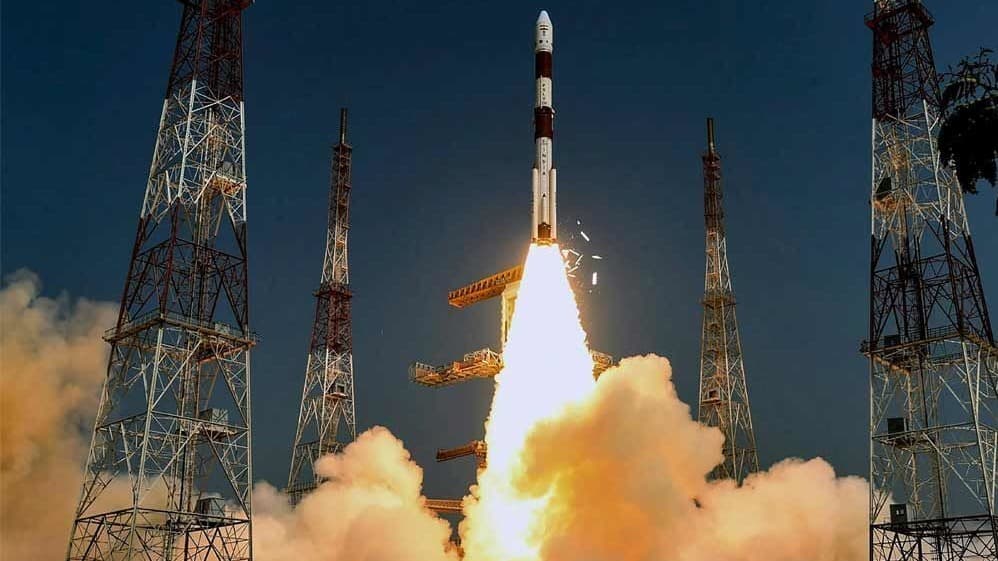
The SPADEX mission, launched aboard a PSLV rocket on December 30, 2023, represents more than a technical demonstration. It is a foundational step toward future endeavors such as the upcoming Chandrayaan-4 lunar mission and India’s own Bhartiya Antariksha Station.
With this achievement, India joins Russia, the United States, and China as the only nations to have mastered in-space satellite docking — a vital capability for long-duration missions, orbital repairs, and building modular space infrastructure.
As India tightens its grip on advanced space operations, the successful “dogfight” underscores not just technological triumph — but also a bold vision for the country’s role in the final frontier.






.webp&w=256&q=75)




.webp&w=256&q=75)
