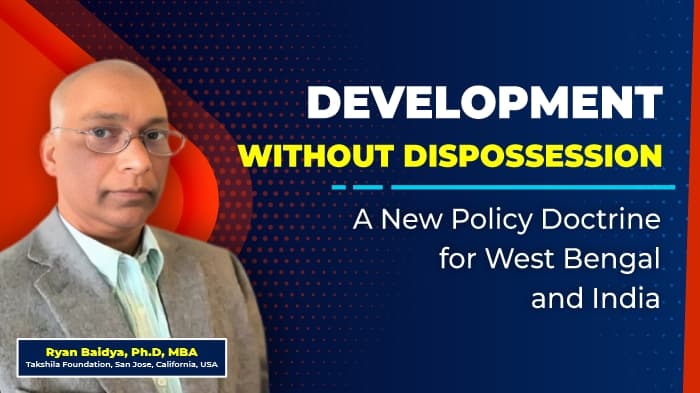
Introduction: The Lesson of Singur
West Bengal stands at an important historical moment. The discussion around inviting Tata Motors or the larger Tata Group back to Singur is not merely about one company, one factory, or one plot of land. It is about whether West Bengal can correct a painful chapter in its industrial history and build a new model of development that is both economically ambitious and morally fair.
Singur became a symbol of lost opportunity. It represented the collapse of trust between farmers, industry, political forces, and the administering state. For the industry, it became a warning sign about uncertainty. For farmers, it became a reminder that land can be treated as an expendable input. For citizens, it raised a larger question: can development be pursued without dispossession?

The answer must be yes.
West Bengal should welcome Tata back. It should welcome advanced manufacturing. It should welcome electric vehicles, battery systems, software-enabled mobility, aerospace components, drones, and eVTOL platforms. But it must not welcome the old model of development in which fertile land is first undervalued, then acquired, and then handed to industry under the language of public purpose.
The new doctrine should be clear:
Development must not be built by weakening the farmer. Industry must grow by partnership, not dispossession.
The Problem with the Old Land Acquisition Mindset
For too long, land acquisition in India has been guided by a narrow and outdated understanding of value. Agricultural land is often valued as a piece of physical property. The government or its agencies determines a compensation amount, and the land is converted from food production to industrial or urban use.
This approach ignores the deeper nature of farmland.
A fertile farm is not dead land. It is a productive enterprise. It produces food every year. It generates family income every season. It supports livestock, labour, community networks, local markets, and rural stability. It is often the only long-term security available to a farming family. It can be passed from parent to child. It protects a family against hunger, unemployment, migration, and inflation.
When such land is acquired, the farmer is not merely losing a plot. The farmer is losing a recurring revenue-producing asset, a family business, a food-security instrument, a social identity, and a multigenerational inheritance.
Therefore, compensation based only on the current market price of land is insufficient.
If Companies Are Valued by Future Revenue, Farmers’ Land Must Be Too
Modern finance does not value companies only by their buildings, machines, or physical assets. Publicly traded companies are frequently valued by annual revenue, future earning capacity, growth prospects, market position, and valuation multiples.
A company with annual revenue may be valued at several times that revenue. Investors do not ask only what the company owns today. They ask what the company can produce tomorrow.
The same principle must apply to farmland.
If a farm produces crops every year, that land has annual productive value. If that productivity can continue for generations, the land has long-term economic value. If that farm supports a household, it also has livelihood value. If it contributes to food supply, it has food-security value. If it has belonged to a family for generations, it has inheritance value.
Therefore, farmland compensation should not be calculated as:
Land value = current market price of the physical land.
It should be calculated as:
Fair land value = market price + capitalized value of future agricultural income + livelihood-loss premium + food-security premium + family-inheritance premium.
In simpler words:
If corporate revenue deserves a valuation multiple, farmers’ annual crop income deserves a valuation multiple too.
This principle should become central to land policy, not just in Singur/WB, but also all over India.
Voluntary Sale Must Replace Forced Acquisition
For the private industry, the administering state should not forcibly acquire fertile agricultural land. If an industrial house wants land, it should acquire it through transparent, voluntary, market-based negotiation.
The government may facilitate, but it should not coerce.
A just land policy should be based on the following principles:
- No forced acquisition of fertile agricultural land for private industry.
- Market price should be the floor, not the ceiling.
- Compensation must include the future income value of the land.
- Consent must be individual, transparent, and free from party pressure.
- Farmers should be offered lease, annuity, equity, or partnership options.
- If land is not used within a fixed period, it should return to the landowners or their heirs.
- Multi-crop fertile land should receive the highest protection.
- Non-agricultural, degraded, unused government, abandoned industrial, or low-productivity land should be prioritized first.
This approach changes the moral structure of development.
The old model says:
The state takes land from the farmer for industry.
The new model says:
The farmer becomes a partner in development.
A Better Compensation Model
If land is voluntarily transferred for industry, compensation should not be a one-time cheque that disappears within a few years. Many land-losing families become poorer after acquisition because they lose a permanent productive base and receive a temporary payment.
A better framework would include:
Upfront market-plus payment.
The landowner should receive a price above the true prevailing market value, not an artificially depressed administrative value.
Future income capitalization.
The net agricultural income of the land should be calculated and multiplied over a reasonable long-term horizon, such as 20 to 30 years.
Inflation-indexed annuity.
Families should receive annual payments linked to inflation, so that compensation does not lose value over time.
Equity participation.
Landowners should receive a share in the industrial park, land-development company, or project SPV.
Employment and skill guarantee.
At least one eligible member of each affected family should receive priority training and employment opportunity, not merely a vague promise of jobs.
Lease instead of sale.
Where possible, land should be leased for a long term rather than permanently sold. This allows the family to retain ownership while participating in development.
Return clause.
If the project fails to start within a fixed period, or if the land is diverted for speculative real estate use, the land should return to the original owners or their heirs.
Such a model would be fairer, more stable, and more acceptable to citizens.
West Bengal’s Opportunity: Do Not Recreate the Past
The new administration in West Bengal should not merely attempt to reverse history by saying, “Bring Tata back to Singur.” That slogan is too small.
The real message should be:
Bengal has learned from Singur. Bengal will now build industry without dispossession.
Singur can become a national symbol again — but this time not as a symbol of conflict. It can become a symbol of reconciliation, consent-based development, and farmer-partnered industrialization.
If Tata or any other major industrial group returns to Bengal, the government should make three commitments publicly:
First, no farmer will be forced to sell.
Second, any land transfer will occur only through voluntary sale, lease, pooling, or partnership.
Third, landowners will be treated not as obstacles to development but as stakeholders in development.
Such a declaration would immediately change the moral and political atmosphere around industrialization.
Why EV Is Good, but eVTOL May Be Better
Electric vehicles are a sensible direction for West Bengal. EVs connect automobile manufacturing, battery systems, power electronics, software, charging infrastructure, and clean mobility. A Tata-led EV ecosystem could create jobs, attract suppliers, and restore industrial confidence.
But West Bengal and India should think even bigger.
The future is not only electric cars. The future includes advanced air mobility, drones, electric cargo aircraft, and eVTOL platforms — electric vertical take-off and landing vehicles.
India has a road problem. Many regions are congested, poorly connected, mountainous, flood-prone, forested, or difficult to serve through traditional road infrastructure. Building roads everywhere is expensive, slow, environmentally disruptive, and often politically difficult.
eVTOL and drone-based mobility offer a different path. They do not eliminate the need for infrastructure, but they reduce dependence on large road networks. They require vertiports, charging systems, maintenance hubs, air-traffic coordination, safety protocols, and regulatory approval. Yet compared to highways, bridges, tunnels, and large airports, the land footprint can be smaller and more flexible.
For India, eVTOL can serve several purposes:
- medical emergency transport,
- remote-area connectivity,
- tier-2 and tier-3 city mobility,
- high-value cargo,
- tourism,
- disaster response,
- border-region support,
- North-East connectivity,
- hill and forest region access,
- and intercity regional travel.
This makes eVTOL especially relevant for West Bengal, North Bengal, the North-East, the Himalayan gateway, Jharkhand, Odisha, Bihar, Sikkim, and the Sundarbans.
Bengal as Eastern India’s Advanced Mobility Hub
West Bengal should not aim merely to become another automobile manufacturing state. Gujarat, Tamil Nadu, Karnataka, Maharashtra, and other states already have strong industrial ecosystems. Bengal should aim to leapfrog.
The state should propose an Eastern India Advanced Mobility Corridor.
This corridor could include:
- EV components,
- battery assembly,
- electric motors,
- power electronics,
- drone manufacturing,
- eVTOL component manufacturing,
- lightweight materials,
- software and simulation,
- pilot and technician training,
- vertiport planning,
- charging systems,
- maintenance and repair operations,
- medical logistics,
- and regional air-mobility services.
Kolkata can become the command and software hub. Durgapur-Asansol can serve as a manufacturing and engineering belt. Haldia can support logistics and port-linked supply chains. Siliguri can become the gateway to North Bengal, Sikkim, Bhutan, Nepal, and the North-East.
Possible corridors include:
- Kolkata–Durgapur–Asansol,
- Kolkata–Haldia–Digha,
- Kolkata–Sundarbans,
- Siliguri–Darjeeling–Kalimpong,
- Siliguri–Sikkim gateway,
- North Bengal–North-East corridor,
- and Kolkata–Ranchi–Patna–Bhubaneswar regional links.
This would position Bengal not as a state trying to recover yesterday’s lost factory, but as a state building tomorrow’s mobility system.
Why Tata Is Strategically Suitable
The Tata Group is uniquely placed for such a transformation. Tata’s ecosystem includes automobiles, batteries, software, engineering, aviation exposure, steel, advanced materials, digital services, and national trust. Tata Motors can contribute to EV and mobility platforms. Tata Technologies, Tata Elxsi, TCS, Tata Power, Agratas, Tata Advanced Systems, and other Tata entities could support the wider ecosystem.
Therefore, Bengal should not invite Tata merely as a car manufacturer. Bengal should invite Tata as an anchor institution for a future mobility cluster.
The invitation should be framed as:
Let Tata help build Eastern India’s EV, eVTOL, drone, battery, software, and advanced mobility ecosystem.
This is far more powerful than simply asking Tata to return to an old project.
Development Must Not Sacrifice Food Security
India must be careful not to destroy fertile farmland in the name of development. Food-producing land is a national asset. Once converted into concrete, it rarely returns to agriculture. Industrialization should not create future food insecurity.
This is why land-use policy must establish a hierarchy.
First preference should go to existing industrial land, closed factory land, abandoned commercial land, degraded land, mining-affected land, unused government land, and land near existing transport infrastructure.
Fertile, irrigated, multi-crop land should be the last resort, not the first target.
Even when fertile land is used voluntarily, the project must justify why such land is necessary. The government should require a public land-use justification report, showing that alternative land was considered and rejected for valid reasons.
Development should not mean that farmers sacrifice their future so that urban elites can claim progress.
The Role of the Administering State
In a democracy, elected officials do not “rule.” They administer. They manage public affairs on behalf of citizens. Therefore, the state must not behave like an owner of citizens’ land. It must behave like a trustee.
The role of the administering state should be:
- to protect citizens from coercion,
- to ensure fair negotiation,
- to prevent corporate capture,
- to prevent political intimidation,
- to secure transparent contracts,
- to protect food security,
- to provide infrastructure,
- to enforce environmental standards,
- and to ensure that development benefits local people.
When the state uses its coercive power to transfer land from weaker citizens to stronger entities, democracy is weakened. When the state helps citizens become partners in development, democracy is strengthened.
A New Development Doctrine for India
India needs a new doctrine of development. It should be based on five principles.
1. Consent Before Conversion
Land-use change must begin with consent, especially when fertile agricultural land is involved.
2. Partnership Before Displacement
Affected landowners should become beneficiaries, not victims.
3. Future Income Before One-Time Compensation
Compensation must recognize recurring productive value.
4. Food Security Before Speculative Industrialization
Fertile land must be protected unless there is an overwhelming public justification and voluntary agreement.
5. Technology Leapfrog Before Copycat Industrialization
India should not merely copy old industrial models. It should invest in EVs, eVTOL, drones, batteries, clean energy, AI-enabled logistics, and future mobility networks.
This doctrine can guide not only West Bengal but all Indian states.
Policy Recommendations
The Government of West Bengal, and eventually the Government of India, should consider the following reforms:
- Create a Farmer-Partnered Industrialization Policy.
- Ban forced the acquisition of fertile multi-crop land for private industry.
- Require voluntary consent for private industrial land transfer.
- Establish a market-plus compensation formula.
- Add future-income valuation to land compensation.
- Provide an inflation-indexed annuity to affected families.
- Offer equity or revenue participation in industrial projects.
- Prioritize lease and land pooling over permanent sale.
- Create an independent Land Consent Commission.
- Record all consent through transparent public procedures.
- Mandate land-return clauses for unused acquired land.
- Prioritize degraded, unused, or non-agricultural land for industry.
- Create an Eastern India Advanced Mobility Mission.
- Invite Tata and others to build EV, eVTOL, drone, battery, and software ecosystems.
- Develop pilot eVTOL corridors in Bengal and the North-East.
- Build skill-training centers for rural youth near industrial clusters.
- Create local procurement and employment obligations.
- Establish public dashboards for land, compensation, employment, and project progress.
- Protect farmers from middlemen, party pressure, and speculative land capture.
- Treat development as a citizen-partnership process, not a top-down administrative order.
Singur as a National Correction
Singur should not be treated as a battlefield between old political forces. It should be treated as a classroom for the future.
The question is not who won Singur and who lost Singur. The question is whether Bengal learned from Singur.
If Singur becomes another case of political acquisition, the wound will reopen. But if Singur becomes a voluntary, farmer-partnered, high-technology development model, it can become one of the most important policy corrections in modern India.
The message should be:
We will not repeat Singur. We will redeem Singur.
Development with Dignity
In conclusion, India needs industry. West Bengal needs industry urgently. Young people need jobs. Cities need mobility. Remote regions need connectivity. Farmers need security. The nation needs food. These goals should not be seen as enemies.
The old model placed farmers and industry against each other. The new model must bring them together.
West Bengal can lead this change. By inviting Tata or other major industrial partners into EV, eVTOL, drone, and advanced mobility sectors, the state can restore investor confidence. By protecting farmers through voluntary transfer, market-plus compensation, future-income valuation, annuity, lease, and equity participation, it can restore moral confidence.
The future of development must not be based on the silent sacrifice of landowners. It must be based on consent, fairness, technology, partnership, and dignity.
That is the new way of thinking development.
Not development by dispossession.
Not industry against agriculture.
Not roads alone for a country that needs air mobility.
Not one-time compensation for multigenerational assets.
India needs a new development compact:
Farmers as partners. Industry as creator. Government as trustee. Technology as a leapfrog. Development as Dignity.
(This article is written by Dr. Ryan Baidya, Takshila Foundation, Silicon Valley, California/Durgapur. WB. This is an opinionated article; EPN has nothing to do with this editorial.)