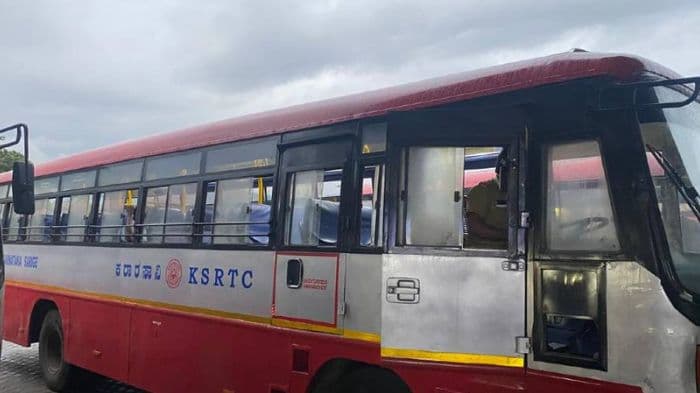
Employees of Karnataka’s four state-run transport corporations, including KSRTC, BMTC, NWKRTC and KKRTC, launched an indefinite strike on Aug 5 at 6 am, paralyzing bus services across Bengaluru and major cities statewide.
The walkout came after conciliatory talks with Chief Minister Siddaramaiah and state officials on the key demands failed to yield results, prompting workers to press ahead despite an interim stay issued by the Karnataka High Court.

The unions, represented by the Joint Action Committee (JAC), are demanding 38 months of unpaid salary arrears, amounting to approximately ₹1,785 crore, and implementation of a 25% salary hike effective January 1, 2024.
The state government's offer to clear only two years of arrears (around ₹718 crore) and delay wage revision beyond 2024 was rejected by union leaders.
HV Anantha Subbarao, president of the KSRTC Staff and Workers’ Federation, reaffirmed that services would remain suspended until the full arrears are paid and the hike implemented.
The strike brought public transportation to a standstill in cities like Bengaluru, Mysuru, Hubballi, Mangaluru and Shivamogga. Daily commuters — over one crore across the state — were left stranded, leading to overcrowded metro stations, long queues at private bus stands, and a surge in demand for cabs and auto‑rickshaws.
Some private operators hiked fares, and auto drivers—already facing meter recalibrations — were accused of charging exorbitantly.
Despite a High Court directive to delay the strike until further negotiation, transport staff proceeded with the protest.
The bench emphasized that halting all public transport would cause extreme hardship to commuters under constitutional rights to mobility — but the unions prioritized their financial grievances.
In response to the crisis, the Karnataka government issued a work-from-home advisory to private companies—particularly within Bengaluru’s IT sector — to ease urban congestion.
Authorities also encouraged private transport operators to step in and maintain basic connectivity, deploying trainee drivers and instructing operators to adhere to fare caps.
Minimal services persisted in select rural or educational zones, where some employees did not join the strike to accommodate student travel. Metro ridership surged, and essential travel became a challenge for many, especially low-income daily wage earners.
Attempts to board other transport modes revealed fare hikes as much as double the usual rate — a recurring pattern during transport disruptions in Bengaluru.
Chief Minister Siddaramaiah and Transport Minister Ramalinga Reddy called on workers to reconsider the strike, citing the state’s ₹4,000‑crore debt burden and the government’s previous 12.5% salary increase in 2016.
They emphasized the importance of negotiation and warned of long-term impact on state finances. Union leaders, however, remain firm, pointing to repeated delays and rejecting incremental offers until full arrears and wage revision are guaranteed.
As negotiations remain deadlocked, public mobility in Karnataka faces continued disruption, with commuters scrambling for alternatives and urban traffic under strain.
The deepening standoff underscores broader questions about labour rights, fiscal constraints, and the urgency of resolving wage disputes in public sector industries.