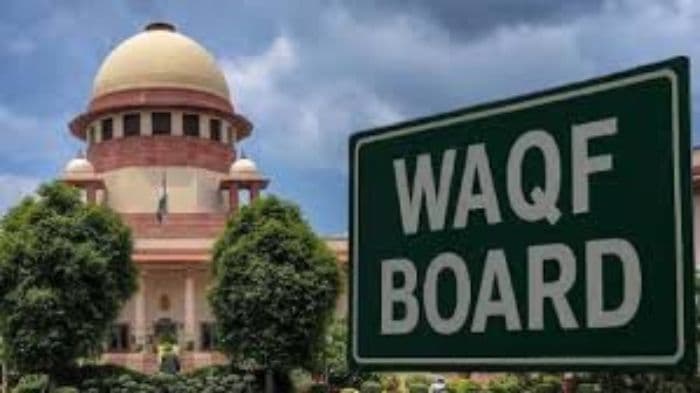
The Supreme Court has put parts of the Waqf (Amendment) Act 2025 on hold while it examines constitutional challenges to the new law.
Acting on a series of petitions from community organizations and political leaders, a bench headed by Chief Justice BR Gavai and Justice AG Masih said several clauses raise serious questions about religious freedom and property rights and should not take effect until the court delivers a final ruling.

Among the provisions stayed is the requirement that a person must have practised Islam for at least five years before dedicating property as Waqf.
The judges observed that the phrase “practised Islam” is undefined and that no state government has framed rules to clarify how such practice would be verified.
They ruled that this clause cannot be enforced until those rules are in place. The court also suspended the section giving a government-appointed district collector the power to determine whether a Waqf property is encroached upon.
Such disputes, the bench held, belong before a tribunal or court and not an executive officer. A third area of concern was the amendment permitting non-Muslims to serve on Waqf Boards and the Central Waqf Council.
While the court stopped short of striking it down, it directed that Muslim representation remain predominant and that any inclusion of non-Muslims be carefully limited. Other changes, including mandatory registration of Waqf properties and new administrative deadlines, remain in force.
Petitioners argued that the 2025 amendments infringe on the constitutional right to manage religious affairs, disrupt long-standing practices of Muslim charitable trusts, and create avenues for state interference in property disputes.
The Union government countered that the changes modernize Waqf administration and improve transparency. The bench said it was not suspending the entire statute but only those clauses that could cause irreversible harm if enforced before a full hearing.
Detailed arguments on the constitutional validity of the amendments will be heard over the coming months, and the interim protections will continue until a final verdict is delivered.





.jpg&w=256&q=75)