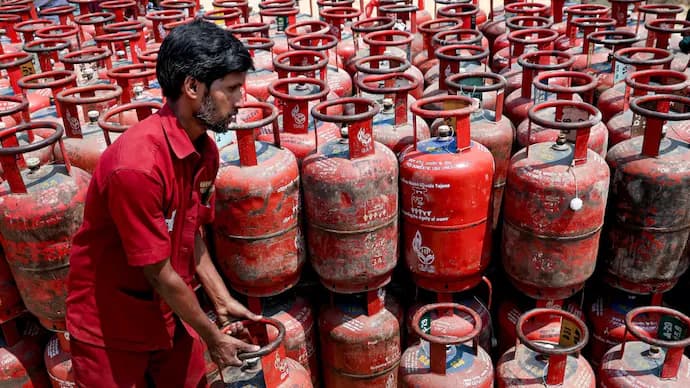
In a move aimed at conserving domestic cooking fuel supplies, the Union Ministry of Petroleum and Natural Gas has directed households with Piped Natural Gas (PNG) connections to surrender their Liquefied Petroleum Gas (LPG) subscriptions and stop taking cylinder refills.
A government notification issued on Saturday states that households using piped gas must immediately give up their domestic LPG connections and will no longer be eligible for LPG cylinder refills from public sector oil companies or their authorized distributors.

The directive forms part of an amendment to the Liquefied Petroleum Gas (Regulation of Supply and Distribution) Order, introduced as the government braces for possible supply disruptions triggered by the escalating crisis in the Middle East.
The revised order also bars PNG users from applying for fresh domestic LPG connections.
“No person having a Piped Natural Gas connection and also having a domestic LPG connection shall retain a domestic LPG connection, or take refills of domestic LPG cylinders from any government oil company or through their distributors,” the notification states, adding that such consumers must immediately surrender their LPG connections.
Hormuz tensions raise energy security concerns
The move comes as India closely watches developments around the Strait of Hormuz, a critical global energy corridor through which roughly 20% of the world’s oil supply is transported.
The passage has remained largely restricted since early March due to the ongoing conflict involving Iran, Israel, and the United States, raising fears of supply bottlenecks for countries heavily dependent on Gulf energy exports.
Earlier in the day, Mohammad Fathali, speaking at the India Today Conclave 2026, confirmed that some Indian vessels had been allowed to pass through the Strait, though he did not specify the number.
“Yes, we have allowed some ships to pass through Hormuz, but we can’t tell how many at this moment. Iran and India have historical relations and common interests,” he said, adding that the two countries were now cooperating after initial communication hurdles.
Indian LPG carriers allowed passage
On Friday, Iran permitted two Indian-flagged LPG carriers — Shivalik and Nanda Devi — to transit through the strategic waterway.
For India, the uncertainty around the Strait of Hormuz poses a significant energy challenge. The country imports nearly 60% of its LPG requirements, with 85–90% of those supplies sourced from Gulf nations, including Saudi Arabia and the United Arab Emirates, whose shipments largely pass through the narrow maritime corridor.
Officials say the latest measure is intended to prioritize LPG availability for households that do not yet have access to piped natural gas, particularly in regions where PNG infrastructure is still limited.