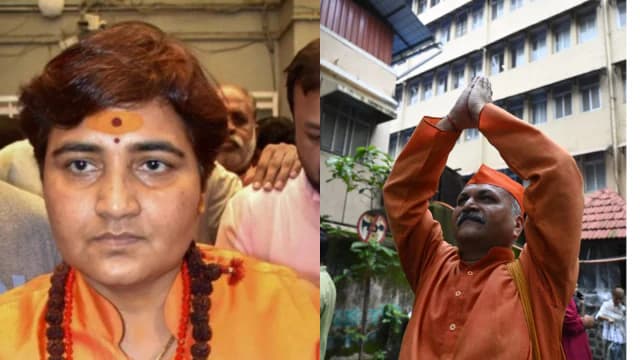
Seventeen years after a bomb ripped through Malegaon during Ramzan, killing six people and injuring over 100, a special court in Mumbai on July 31 acquitted all seven accused, including BJP MP Pragya Singh Thakur and Lieutenant Colonel Prasad Shrikant Purohit, citing lack of admissible evidence and serious procedural lapses.
Delivering the verdict, Special Judge A K Lahoti noted that while the blast was proved, the prosecution failed to conclusively link the accused to the crime. “A grave degree of suspicion exists, but suspicion alone is not enough to convict,” the judge said. “Terrorism has no religion. No religion can ever endorse violence.”

The court ruled that the prosecution had failed to establish criminal conspiracy, murder, or violations under the Unlawful Activities (Prevention) Act. It also declared the interceptions of calls inadmissible, terming them unauthorized, and said the government’s sanctions to prosecute under UAPA were defective.
The seven accused — Pragya Thakur, Lt Col Purohit, Major (Retd) Ramesh Upadhyay, Ajay Rahirkar, Sameer Kulkarni, Sudhakar Chaturvedi, and Sudhakar Dhardwivedi — were cleared of all charges. The judgment brings to an end one of India’s most high-profile terror trials, but leaves behind lingering questions about investigative failures, delayed justice, and the politicization of terror cases.
Compensation ordered, but questions remain
While acquitting the accused, the court directed the government to compensate the victims — ₹2 lakh each to the families of the deceased, and ₹50,000 to those injured in the September 29, 2008 blast in the communally sensitive town of Malegaon in north Maharashtra.
The bomb was planted on a motorcycle and exploded near a mosque, targeting the Muslim community during the holy month of Ramzan. The Maharashtra ATS initially probed the case, later handing it over to the National Investigation Agency (NIA) in 2011.
Shift in narrative, shifting evidence
The NIA chargesheet, filed in 2016, pointed to lapses in the ATS investigation and recommended dropping charges under the Maharashtra Control of Organised Crime Act (MCOCA), which made key confessions inadmissible.
The agency’s probe relied largely on re-examined witness testimonies and technical evidence such as Call Data Records and voice samples. But over time, nearly 40 of the 323 witnesses turned hostile, while more than 30 had died before the trial began. The delay, the prosecution admitted, had severely hampered the case.
The accused consistently maintained that no direct evidence linked them to the blast, and that the alleged conspiracy meetings were neither proven nor corroborated by witnesses.
The detailed judgment is yet to be released, but the verdict brings both legal closure and fresh scrutiny over the handling of a case that was once dubbed India’s first instance of “saffron terror.”