Climate change-driven urban flooding tests city infrastructure and planning

Weather Scenario & Alerts
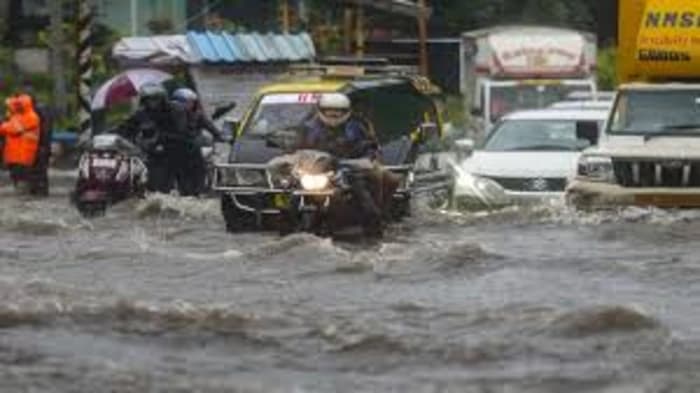
On 29 September 2025, Mumbai and districts like Palghar, Thane, Raigad, Nashik, and Pune experienced extremely heavy rainfall. The India Meteorological Department (IMD) issued red alerts in several of these zones.

Schools in Palghar were ordered closed as a precaution.
Impacts Observed
Flooding & Waterlogging: Low-lying areas inundated, disrupting transport and daily life.
Transport Disruption: Road connectivity, public transport affected; risk to commuter safety.
Infrastructure Strain: Drainage systems overwhelmed; possible damage to roads, utilities.
Public Health & Safety: Increased risk of vector-borne diseases, accidents, and disruptions in essential services.
Underlying Factors
Urban Poor Drainage: Encroachments, clogged drains, unplanned expansion.
Climate Change Intensification: Extreme precipitation events are becoming more frequent due to warming.
Lack of Preparedness: Insufficient early warning systems at hyperlocal scale, deficient drainage capacity, weak coordination.
Policy & Governance Implications
Strengthening Urban Resilience: Cities must become “urban sponges” – permeable pavements, water retention zones, rain gardens.
Integrated Stormwater Management: Desilting of drains, sustainable drainage systems (SuDS), check dams.
Multi-tier Coordination: Municipal, district, state disaster management authorities to collaborate on alert, evacuation, relief.
Community Engagement & Awareness: Local residents need training for flood response, ground‑level watch.
Strategic Perspective
Treat such events not as “once in a while” but as the new normal given climate trends.
Invest in real-time forecasting, micro-weather models, IoT sensors in urban drainage networks.
Incorporate climate adaptation into all new urban infrastructure.

India’s Blue Economy Push Seeks to Balance Growth and Ocean Conservation

Supreme Court Seeks Panel to Curb Unethical Pharma Marketing Practices

NMC Tightens Rules on Doctors’ Digital Advertising and AI Use

Anthropic Launches Claude Haiku 5.5 as Its Fastest and Cheapest AI Model

Karnataka HC Replaces ‘Visitation’ with ‘Parenting Time’ in Child Custody Cases

Canadian author Anne Carson wins 2026 Nobel Prize in Literature for reshaping contemporary literary forms

AMU students’ protest enters third week as union election demand widens

DPDP Act Explained: What is India’s Digital Personal Data Protection Law and Why is it in the News?

IIT Bombay puts stricter cheating rules on hold, drafts new procedure for exam misconduct

Gujarat launches PARAKH Cell to shift school assessments toward competency-based learning

India’s Blue Economy Push Seeks to Balance Growth and Ocean Conservation

Supreme Court Seeks Panel to Curb Unethical Pharma Marketing Practices

NMC Tightens Rules on Doctors’ Digital Advertising and AI Use

Anthropic Launches Claude Haiku 5.5 as Its Fastest and Cheapest AI Model

Karnataka HC Replaces ‘Visitation’ with ‘Parenting Time’ in Child Custody Cases

Canadian author Anne Carson wins 2026 Nobel Prize in Literature for reshaping contemporary literary forms

AMU students’ protest enters third week as union election demand widens

DPDP Act Explained: What is India’s Digital Personal Data Protection Law and Why is it in the News?

IIT Bombay puts stricter cheating rules on hold, drafts new procedure for exam misconduct

Gujarat launches PARAKH Cell to shift school assessments toward competency-based learning
Copyright© educationpost.in 2024 All Rights Reserved.
Designed and Developed by @Pyndertech