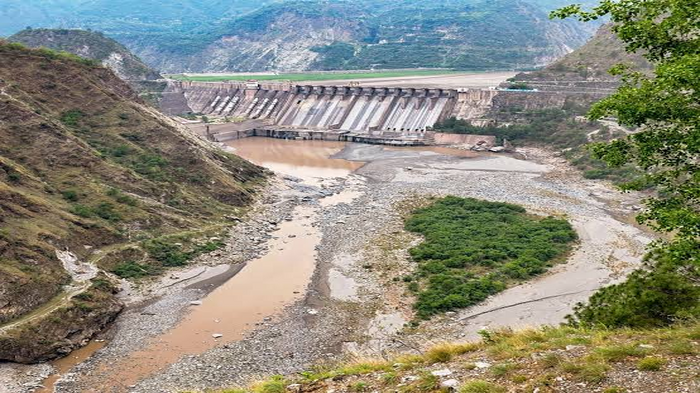
India's decision to place the Indus Water Treaty (IWT) in abeyance following the heinous Pahalgam terror attack last year by Pakistan-backed terrorists that killed 26 innocent civilians is both “strategic and logical” given that international agreements cannot be disregarded to serve the interest of one party. The existing IWT framework, built on unconditional trust and placing the obligations solely on India without reciprocal gains, has proven ineffective and needs to be replaced, a report has stated.
According to a report by Media India Group, Pakistan has failed to demonstrate requisite commitment to peaceful engagement, constructive dialogue with India and the effective implementation of the treaty. It added that Islamabad has repeatedly resorted to hostile rhetoric and undiplomatic provocative statements, including threats of nuclear strike against India, while undermining the very spirit of the IWT through its continued support for cross-border terrorism.

“With India sticking to its stance on the suspension of the Indus Water Treaty, a pact signed in 1960 on sharing of waters of the five Himalayan rivers in the Indus Basin, Pakistan finds itself in a state of desperation. But it must realise and recognise that it needs to behave like a good neighbour with India, just as India has behaved with it since the partition in 1947. Threats, whether nuclear or of approaching international tribunals, will not get it anywhere,” the report detailed.
The report stated that India has consistently maintained that it will continue to adopt firm and resolute measures against cross-border terrorism. New Delhi underlined that meaningful dialogue with Pakistan can only be pursued in a climate free from terror and violence, backed by a commitment from Pakistan to prevent the use of its territory for terrorism targeting India.
The Indian government has articulated its official position in simple terms: “water and blood cannot flow together, and neither can terror and trade go hand in hand.”
“Pakistan has launched four conventional wars against India, and every one of these misadventures have ended in international embarrassment and diplomatic setback for the country. But more revealing than the defeats themselves is what has followed all these years. Instead of introspection, Pakistan’s military-political establishment redoubled its hostility, choosing denial over accountability, and ideological rigidity over course correction,” the report mentioned.
“Therefore, unless and until Pakistan undergoes a radical shift in its national consciousness, a transformation that dethrones the military’s ideological monopoly, embraces democratic accountability, and reimagines Pakistan not as a bulwark against India but as a viable State in its own right, the hopes for regular flow of Indus water and normal cross-border trade are likely to remain a distant dream. Without this metamorphosis and transformation, any dialogue with Pakistan will remain fragile, unsustainable and every overture is destined to be doomed,” it added.