India and the European Union are deepening cooperation in the space sector, with growing opportunities in Earth observation, disaster management, space sustainability and strategic autonomy.
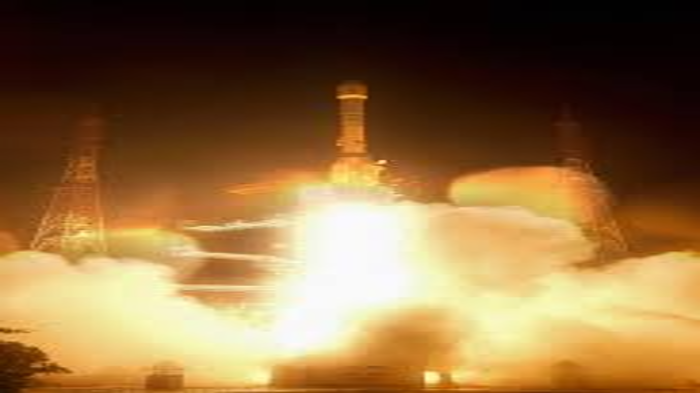
India’s launch of EOS-05, its first imaging satellite designed to operate from an orbit synchronised with the Earth, marks an important addition to the country’s space capabilities, according to an article by Javier Villamor published in Brussels Signal.

Positioned at an altitude of nearly 36,000 km, EOS-05 can maintain a wider view of a region and revisit the same area more frequently. This could strengthen India’s ability to monitor cyclones, floods, wildfires, agricultural conditions and coastal activity.
The article noted that developing domestic satellites, launch systems and observation capabilities can reduce India’s dependence on foreign providers and strengthen its technological autonomy.
At the same time, the European space ecosystem offers complementary capabilities. Europe’s Copernicus programme uses the Sentinel satellite network to monitor land, oceans and the atmosphere, combining radar, optical imaging, meteorological and atmospheric data.
India and the EU are therefore pursuing different but potentially complementary approaches to space development. India is expanding capabilities in launch vehicles, Earth observation, navigation, human spaceflight and plans for a future space station, while Europe is focused on maintaining industrial and strategic autonomy.
Cooperation between the two sides has already produced tangible results. In December 2024, India launched the European Space Agency’s Proba-3 solar observation mission aboard an Indian PSLV-XL rocket. The European Space Agency and ISRO have also expanded cooperation in areas including human and robotic exploration, astronaut training, space operations and interoperability.
An exchange of letters signed in Paris on September 10 extended the existing cooperation framework until January 8, 2032, while adding areas such as space weather and the long-term sustainability of outer-space activities.
The two sides have also exchanged Earth-observation data since 2018 under an arrangement involving the European Union’s Copernicus programme and selected Indian civilian satellites. India gains access to Sentinel data, while Europe can use data from Indian missions, although commercial high-resolution imagery remains outside the arrangement.
Disaster management could emerge as one of the most immediate areas for deeper cooperation. Persistent observations from Indian satellites could be combined with Europe’s radar, multispectral imagery and emergency-mapping capabilities to improve responses to cyclones, floods and other rapidly developing disasters.
The growing number of satellites also makes space traffic management increasingly important. Cooperation in areas such as space surveillance, communications and security could help both sides protect critical space infrastructure and reduce risks from orbital congestion.
Closer India-EU space ties could therefore create opportunities for both sides to combine their respective technological strengths while strengthening resilience and strategic autonomy in an increasingly important domain.