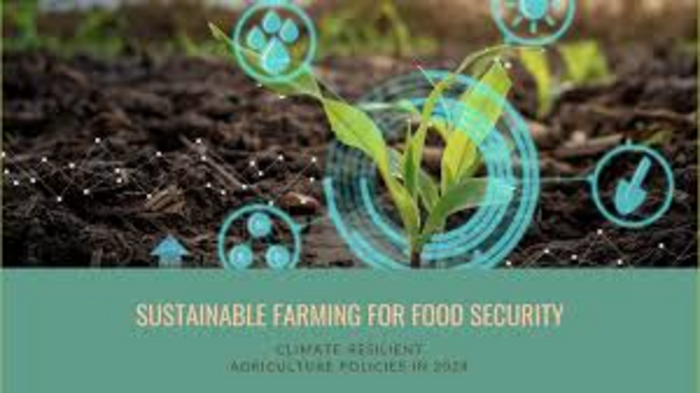
Climate change is increasingly affecting food security in India, as erratic rainfall, rising temperatures, and extreme weather events such as floods and droughts disrupt agricultural production. With agriculture being a primary source of livelihood for millions of farmers, these challenges threaten not only crop yields but also the broader goal of ensuring affordable and accessible food for the population.
To address these risks, promoting climate-resilient agriculture has become essential. The development and adoption of drought- and flood-tolerant crop varieties help farmers withstand unpredictable weather patterns. Crop diversification, intercropping, and sustainable farming practices reduce dependence on a single crop and enhance resilience.

Efficient irrigation systems, including drip and sprinkler methods, are crucial in optimizing water use and mitigating the impacts of water scarcity. Additionally, adopting modern agri-technologies, such as precision farming, remote sensing, and soil health monitoring, enables farmers to make data-driven decisions and improve productivity.
Government initiatives and research institutions play a key role in supporting climate-resilient agriculture. Extension services, training programs, and financial incentives encourage farmers to adopt sustainable practices. Investments in storage infrastructure, supply chain management, and market access further strengthen food security.
Experts emphasize that building resilience requires a holistic approach, combining technology, policy support, and local knowledge. By promoting climate-smart agriculture, India can safeguard its food systems, support farmer livelihoods, and ensure sustainable development even in the face of growing environmental challenges.
In conclusion, climate-resilient agriculture is not just a strategy for productivity—it is a necessary step to secure India’s food future and build sustainable, inclusive rural economies.