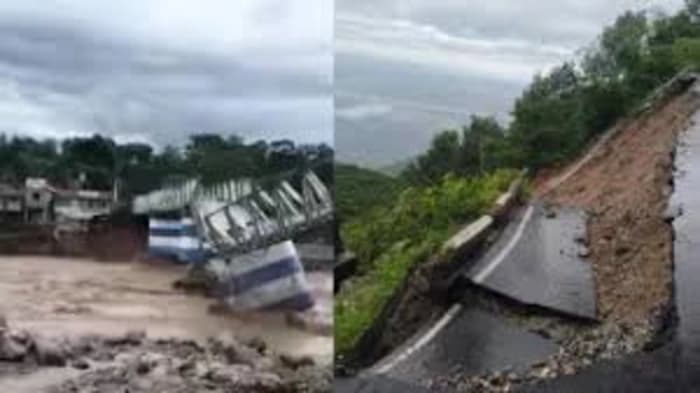
The region’s fragile topography, coupled with intensifying monsoon patterns, demands robust disaster preparedness and hill‑area governance reforms.
Causes & Contributing Factors

Intense, prolonged rainfall surpassing usual thresholds stresses slopes and weakens soil cohesion.
Geological fragility: steep gradients, fractured rock structures, thin soil cover.
Anthropogenic stress: unplanned road cuts, uncontrolled urbanization, deforestation, inadequate drainage.
Climate link: forecast indicates above‑average rainfall for October 2025 across India — raising flood/landslide risk.
Impacts
Loss of life, destruction of homes, bridges, roads, disruption of connectivity, tourism impact.
Rescue operations hampered by damaged roads, continuing rain, access constraints.
Economic disruption for local population dependent on agriculture, tourism, trade.
Challenges & Gaps
Real‑time slope monitoring and early warning systems are weak or limited in many hilly districts.
Coordination delays across state forest, local, transport, PWD, disaster response agencies.
Insufficient investment in hazard mapping, slope stabilization, drainage infrastructure.
Post‑disaster relief often reactive, with long time lags in compensation and rehabilitation.
Policy & Institutional Recommendations
- Strengthen Early Warning & Monitoring
- Real‑time sensors (rain gauges, slope inclinometers, remote sensing) in vulnerable zones.
- Automated alerts integrated with local administration and disaster agencies.
- Slope Stabilization & Green Engineering
- Bioengineering methods (terracing, retaining walls with vegetation, geotextiles).
- Enforcing building setback norms, restricting construction in high hazard zones.
Land Use & Zoning Reforms
- Hazard maps to guide land use — avoid settlements in high‑risk zones.
- Retrofitting existing vulnerable structures.
- Capacity Building & Community Involvement
- Training local communities in risk awareness, evacuation, shelter protocols.
- Involving gram panchayats/hill councils in micro‑planning.
- Fiscal Mechanisms & Insurance
- Use of the proposed parametric insurance scheme (see Article 4) to provide liquidity.
- State disaster funds prioritized for preventive works in hillside districts.
Conclusion
The Darjeeling landslides of October 2025 are a tragic manifestation of intensifying climate risk in fragile terrains. Preventing such disasters requires upstream thinking: scientific monitoring, green engineering, land use planning, and institutional clarity. As rainfall extremes become more frequent, hazard resilience in hill districts must become a development priority, not just a response priority.