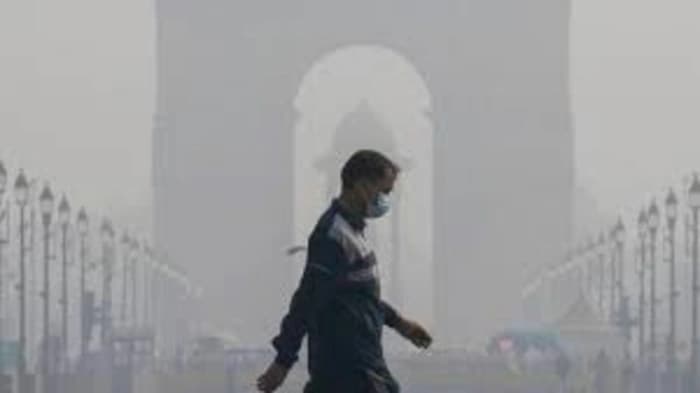
Delhi-NCR witnessed one of its worst pollution spikes of the season on 19 November 2025, with the Air Quality Index (AQI) touching 543 and PM2.5 levels rising to 384 µg/m³—several times higher than the WHO safe limit of 25 µg/m³ (24-hour mean). The crisis once again brought to the forefront debates on environmental governance, health impacts, and the constitutional guarantee of the Right to Life under Article 21.
Current Situation
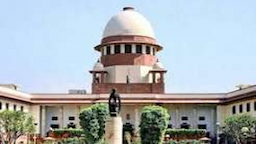
The hazardous-level AQI prompted the Supreme Court of India to intervene, directing the Commission for Air Quality Management (CAQM) to consider deferring sports and outdoor activities in NCR schools for November–December. The Court emphasised the severe threat to children’s respiratory health, urging proactive preventive measures rather than reactive steps.

Causes of the Pollution Spike
1. Seasonal Factors & Geography
- Stubble Burning: Punjab and Haryana continue to contribute a significant share of PM2.5 pollution during late October–December.
- Meteorology: Low wind speed, temperature inversion, and the Indo-Gangetic Plain’s bowl-shaped terrain trap pollutants.
2. Local Emission Sources
- Vehicular Pollution: Delhi’s dense traffic is the single-largest year-round contributor to NOx and PM.
- Construction Dust: Unregulated sites, road dust resuspension, and industrial sources add to particulate load.
- Household Emissions: Biomass burning in peri-urban and rural edges worsens winter air quality.
Policy Responses
Short-Term Measures
- Odd–Even scheme to cut vehicular load.
- Ban on construction activities during severe AQI days.
- Closure of brick kilns, diesel generators, and polluting industries under CAQM’s Graded Response Action Plan (GRAP).
- School activity restrictions, now under SC review.
Long-Term Measures
- Promotion of electric vehicles and expanded public transport (metro, e-buses).
- Smog towers, mechanised street sweeping, and dust-control strategies.
- Incentivising crop-residue management machinery (Happy Seeder, Super Seeder).
- Enhancing air-quality forecasting and satellite-based stubble monitoring.
Legal & Constitutional Angle
1. Article 21: Right to Life and Clean Air
Indian courts have repeatedly held that clean air is part of the Right to Life, expanding environmental jurisprudence under the doctrine of sustainable development, precautionary principle, and public trust.
2. Judicial Oversight
The Supreme Court’s continuous monitoring reflects judicial concern for state inaction. The Court’s nudge to CAQM on children’s exposure underscores the need for coordinated governance between Union, states, and local bodies.
3. Accountability and Governance Gaps
Fragmented jurisdiction between Delhi, Haryana, Punjab, UP, and central agencies complicates implementation. Policy volatility, lack of enforcement capacity, and political blame-shifting hinder progress.
Conclusion
The Delhi-NCR smog crisis is no longer an annual “weather event” but a chronic governance and public health challenge. With hazardous AQI levels threatening fundamental rights, India needs sustained inter-state coordination, behaviour change, technological adoption, and strong enforcement. The constitutional dimension—linking environmental quality to Article 21—makes clean air not merely an environmental goal, but a human right that demands urgent and continuous action.